
When I think of tartan I think of a coloured cloth, where the colour is in horizontal and vertical bands, causing areas of mixed colours. After taking on a commission in which the customer wanted a tartan pattern I decided I should probably gain more information about the colour, structure and pattern of tartan. If I could find out the ‘rules’ for traditional tartan I could then create a contemporary fabric using traditional ideas.
I found that originally tartan was woven using wool and did not have to be patterned at all. . In 1746 tartan was banned by the government in order to attempt to get rid of the Gaelic culture, although this ban was lifted in 1782. When there was colour the yarn was dyed using natural dyes, therefore the tartan was associated with a region or district, rather than a Scottish clan or family. It wasn’t until the middle of the nineteenth century that these tartans started to be associated with particular clans.
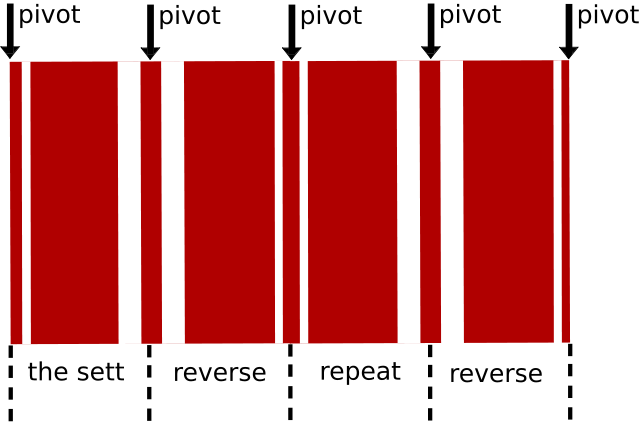
When I first started looking at tartans I saw that the all follow the same format. The diagram shows the construction of tartan. There is a sett, which is repeated and reversed throughout the cloth at certain pivot points. It doesn’t particularly matter on the structure of the original sett, as long as the regular pivots are used it will be a tartan. The weft is woven using exactly the construction as the warp.
http://en.wikipedia.org/wiki/Tartan