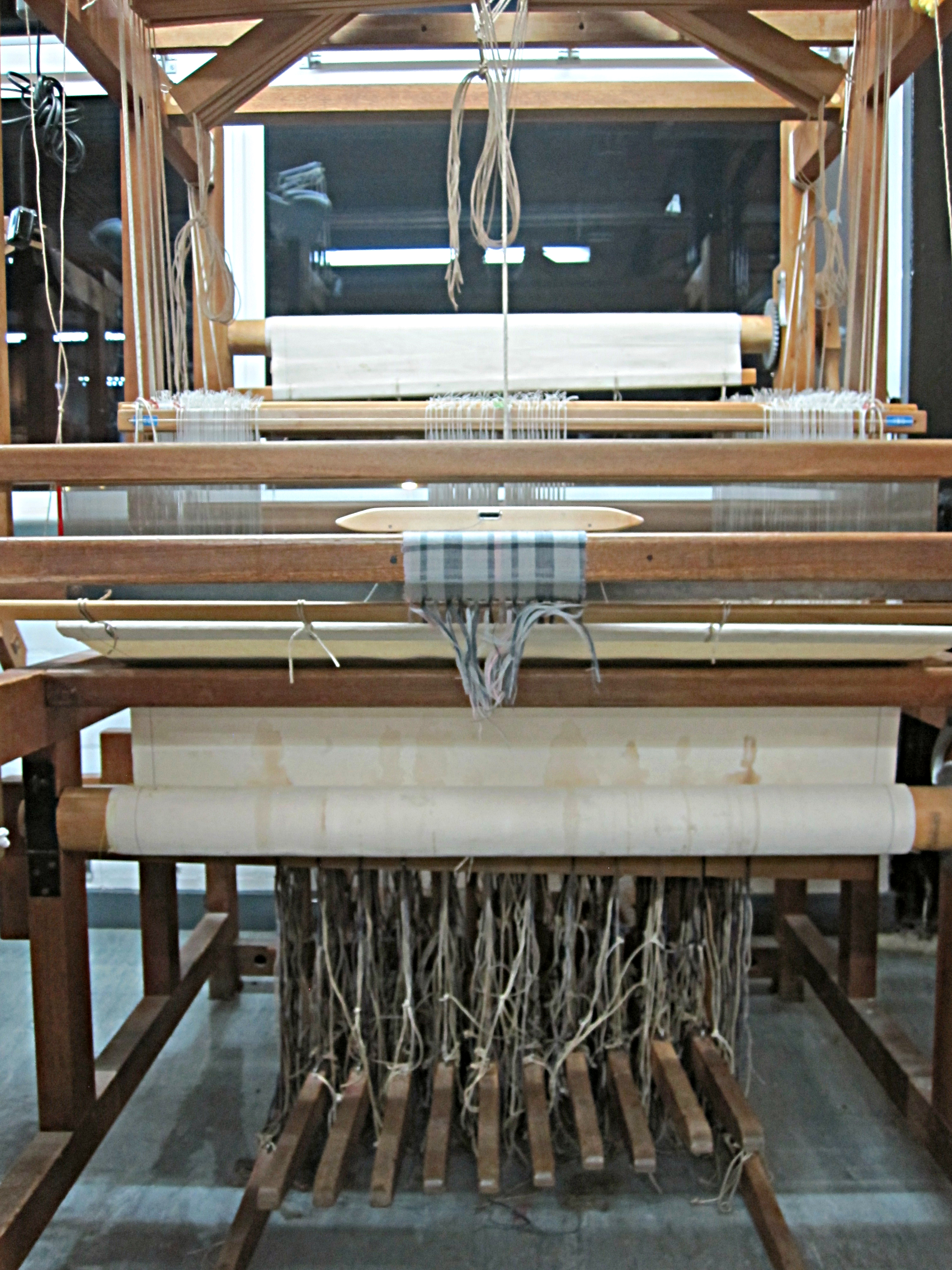
I have now started weaving my small samples for the ties, using a Countermarch loom for the first time. Working at UCA has made me realise that if you know how to weave then most looms are based upon all the same basic principles, once you know how to use one then you can work out how to use most looms. Of course, I have not used every type of loom and I’m sure industrial looms are very different. UCA is very unique in having Countermarch looms, there are not many universities with these types of looms.
Countermarch looms can take a bit longer to set up as the loom needs to be set up before the warp can be put on. Each time it is used, the shafts (up to 12 for this one) needs to be put on the loom, then tied to the lams (which decide whether the shaft rises or falls) and finally tied to the treadles. This set up includes a lot of ties so it can take anything from a few hours to a day to set up, this depends on how many shafts and treadles need to be tied up and the experience of the weaver. Each treadle represents a single pick so on this particular loom so I am restricted to 12 different picks, although there is a lot that can be done with 12 picks. With a Countermarch loom every shaft moves with every pick, it will either rise or fall, meaning that it is kind to the warp so ideal for more delicate yarns.
It is lovely loom to use, particularly as I am used to using a table loom. When it comes to using the outside treadles it took a little time to get used to it as they are quite far apart so it seemed awkward to start with but i am not enjoying it and looking forward to weaving more.