by katie | Oct 7, 2011 | Blog
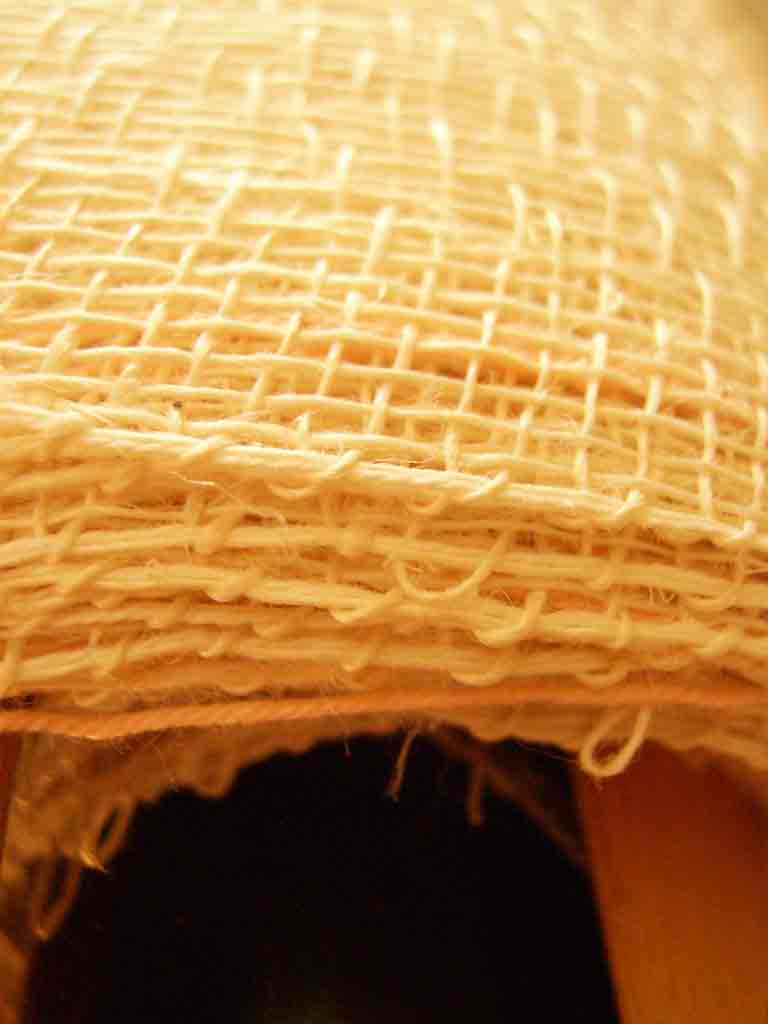
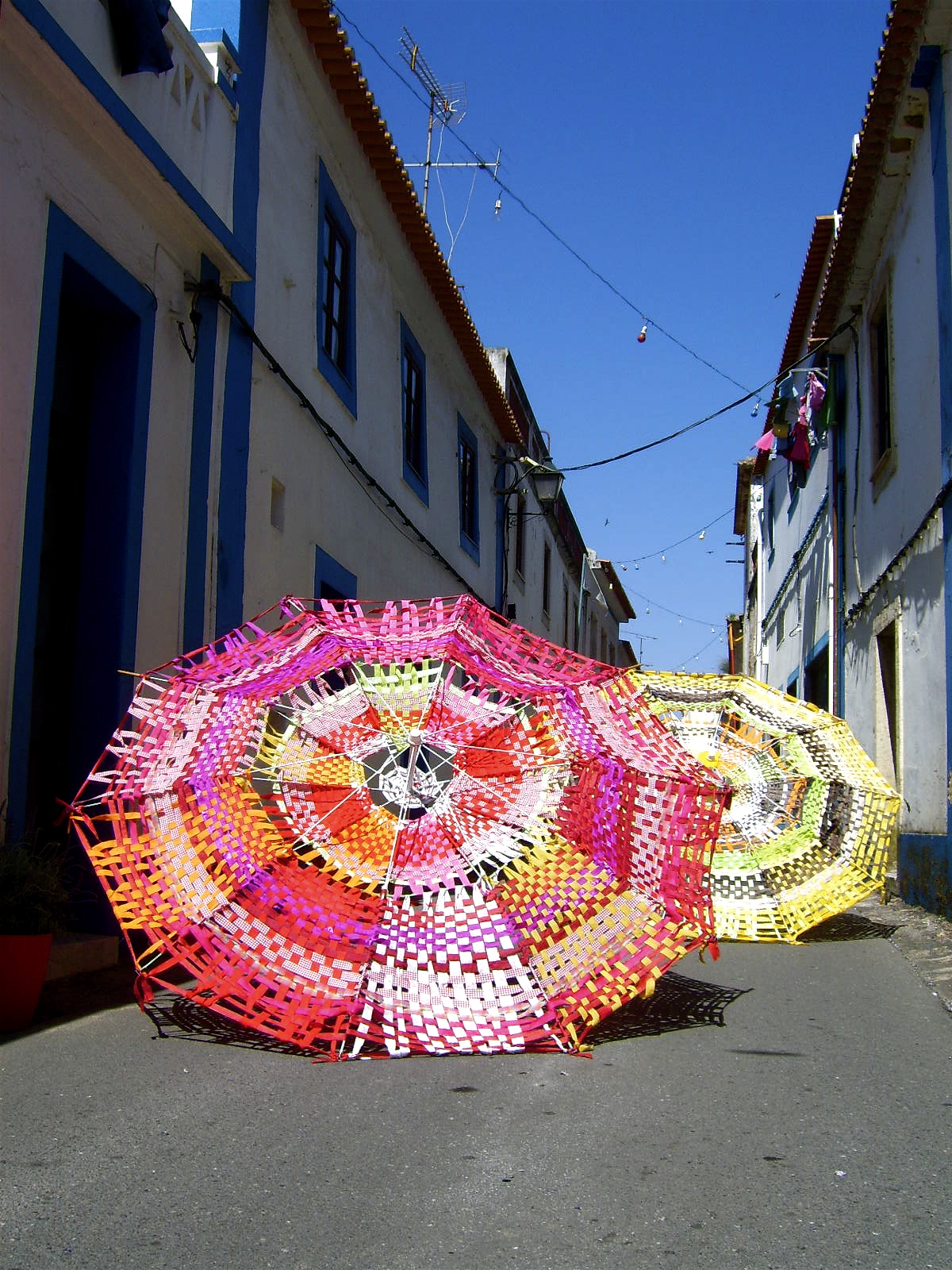
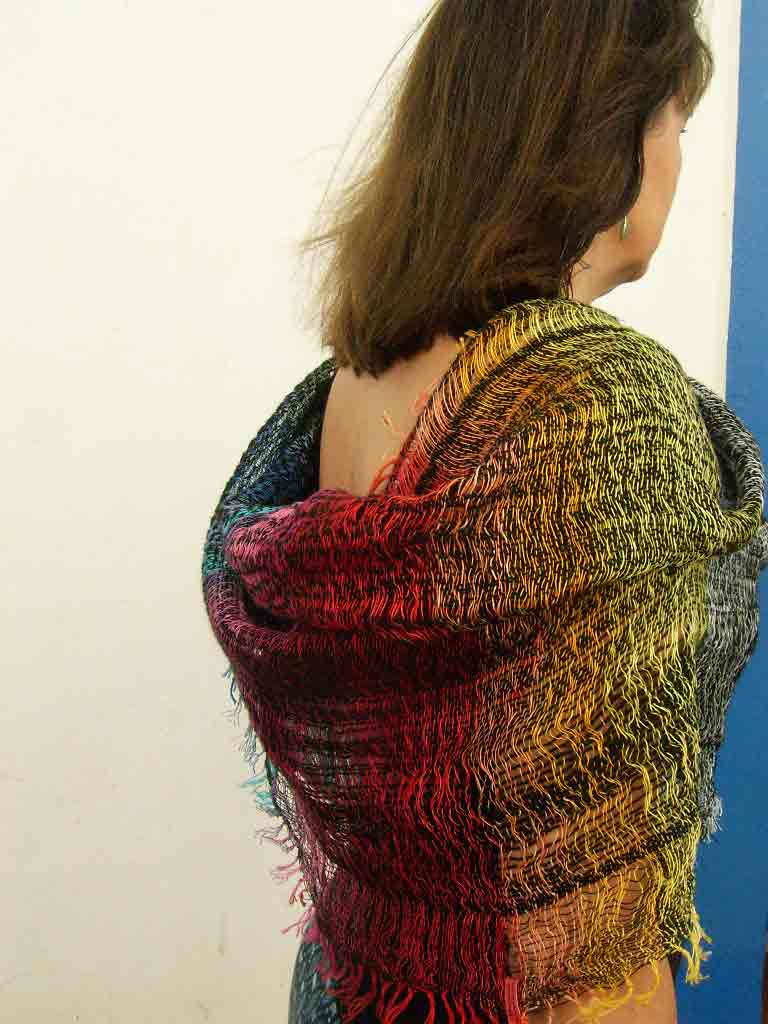
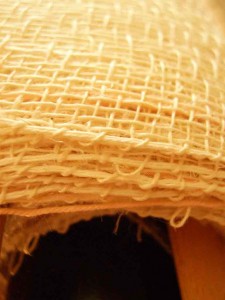
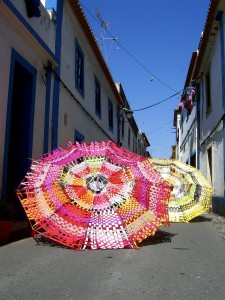
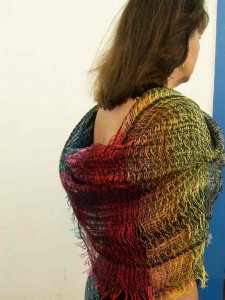
Helena Loerma is a weaver based in Odemira, Portugal. She uses hand and computer aided looms to create her own collections, as well as teaching workshops and courses in her studio. To keep herself up to date with techniques she visits the Liso Foundation in Florence, Italy. Her work is very open and textural, she produces it for a range of things such as scarves, window dressings etc.
 …..
…..
 …..
…..
http://helenaloermans.blogspot.com/
by katie | Aug 30, 2011 | Blog
All of my life I have loved teddy bears. I collect them from places I have been. Each of them, whether a traditional teddy or more contemporary animal shape they all mean something to me and hold many memories. I have taken the opportunity (while I have the time) to make a teddy bear, something I have wanted to do for a long time.
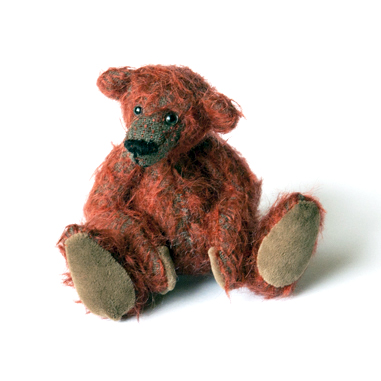
This teddy bear if called Rusty and he is made from mohair. He as fully working arm, leg and head joints (Cotterpin joints) and glass eyes. It was more fiddly than I thought it would be, which might be due to his size of only 4inches. The most difficult bit was stitching him up once stuffed. My first attempt is a bit messy but I am pleased with the overall result. Making Rusty has given me a new enthusiasm, I am now going to try weaving my own fabric for my next teddy bear.
by katie | Jul 4, 2011 | Blog
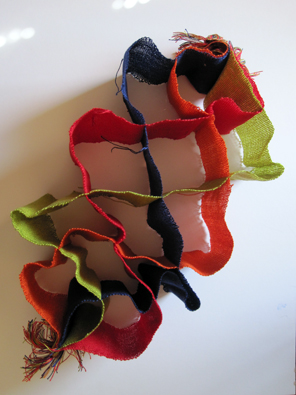
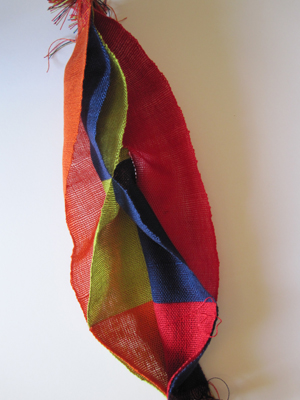
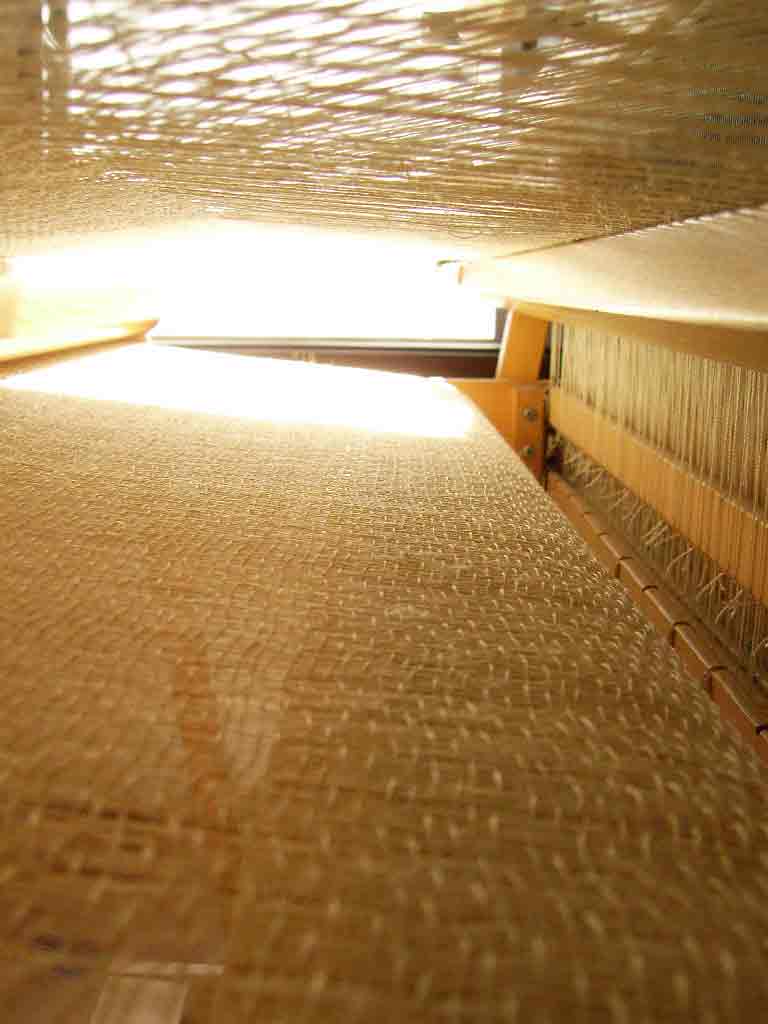
After going to the Warp and Weft exhibition in Bury St Edmunds I felt inspired to experiment with three-dimensional weaving. Lucy McMullen weaves up to six cloths. On my 8-shaft loom I can weave up to four cloths, I had a go at the multiple cloth weaving to try to get a grip on how she does it. In my attempt I decided to make it easy for myself and used one colour per cloth, this meant I could keep track of where each cloth was goes and when it was being woven. I found it hard to weave them to the same standard because I could see only one cloth at a time, I also need more practice with getting my edges straight. The first two pictures show the cloths being woven independently, and the last I joined on side of the cloths together to create pockets. I am pleased with my first attempt and now have more understanding of how to use multiple cloths.
………
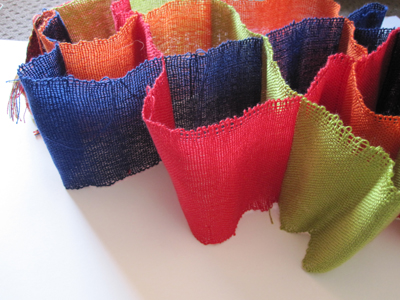
…………
by katie | Jun 30, 2011 | Blog
I spent the day in London at New Designers, a place for newly graduated student to show off the best of their work in hope they may get spotted for a job opportunity. The standard for work was incredible. I am interested in my work next year becoming more neutral, not because its an easy option! I genuinely love neutrals, it seem to be what I am always drawn to, but texture plays a big part in what I like too. I looked at how other people did neutrals as New Designers as it can be hard to get right. The successful pieces had small amounts of neutral colours such as purple or green, or even just undyed yarn. It goes wrong when the natural colour of the yarn is yellowy, it is worth dying the natural yarn a natural colour to ensure this yellowness doesn’t come through. I also saw a lot of texture and structure in terms of weaving. Looking at the way things were hung was also interesting, very important as the hanging can make or break a piece; a lot of monofilament was just so the hanging did not show, also pins held up fabrics by the corners, shelves or rails were used to display smaller pieces. I loved one where they had gotten hold of a professional hanging panel glide system, it was used to hang wallpaper as it would be seen in a shop. It was a very inspiring place to be, not only for weaving and textiles but the ceramics and jewellery was also fantastic.
by katie | Jun 29, 2011 | Blog
I have just completed a work experience at Clement Joscelyne, Norwich. They are a group of five shops in East Anglia who sell home furnishings from accessories to furniture, as well as providing an interior design service. This is the team I worked with, in the shop they show customers fabrics and wall papers, putting together mood boards if required. I spent a lot of time looking through their vast collection of fabrics they sell; all very high end, luxurious fabrics. I found the ones I was most interested in were the more neutral fabrics with texture and unusual yarns, such as Ulf Moritz, Sahco and, Zimmer and Rohde, these also were mostly sheer fabrics. This is something I want to think about doing in my final year of uni, concentrating on my materials experimentation. I helped choose the furniture to be displayed in store, as the room setting are all going to be changed. On my final day I put together a mood board: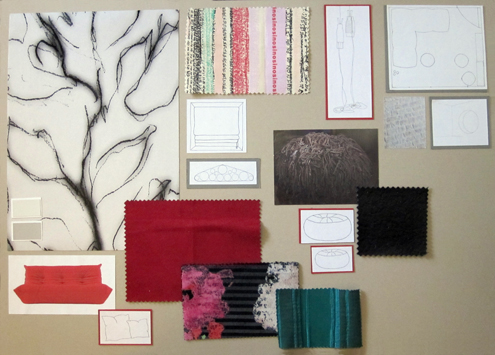
This mood board is a plan/design for a contemporary living space, it includes everything from the wall paper, accessories, architecture, furniture, fabrics etc. I learnt a lot about how to put together an interior design mood board, how to do a floor plan, the things I need to include such as drawing, and how to mound fabrics. These are produced at Clement Joscelyne so that customers can see what their space will look like, a mood board really helps to sell them the design as it can be hard to visualise what it will look like.
by katie | Jun 20, 2011 | Blog
The textiles show at the Norwich University College of the Arts was split in to two halves. On the ground floor there was work displayed for sale, they had created products such as lanterns, scarves, wooden letters, clothes etc. In a space above this shop there was more background work, large pieces of fabrics, experimental work, samples etc. This enabled students to show of their abilities for creative textiles as well as finished pieces. I was impressed with the variety of work produced, it shows that textiles is a very broad subject. For me it is all about creativity and the sense of touch, this is what drew me into textiles, textural sufaces (I have to touch everything I see). Bearing this in mind I may need to come up with some sort of product to produce within my textiles work, up until now I have just been experimenting with weaving and making samples.

 …..
…..