by katie | Mar 23, 2012 | Blog
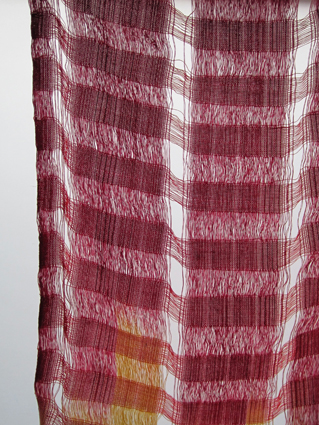
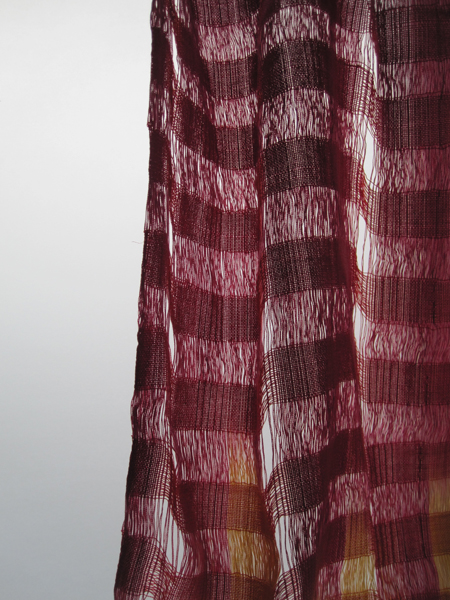
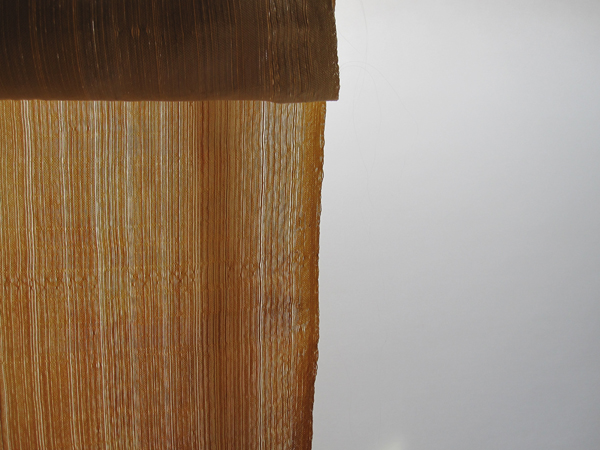
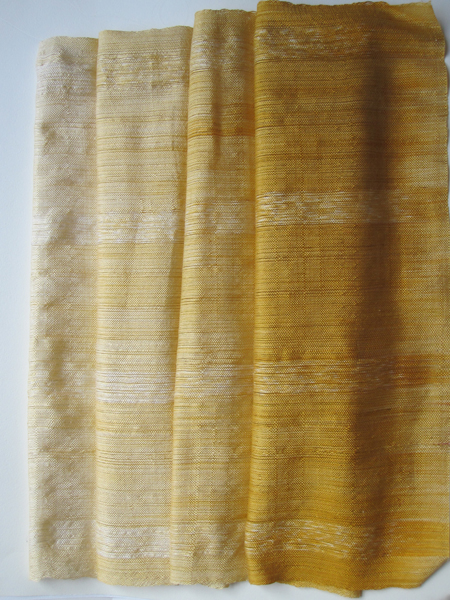
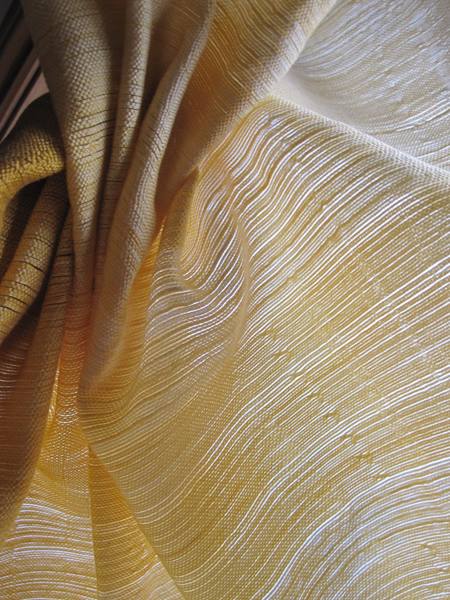
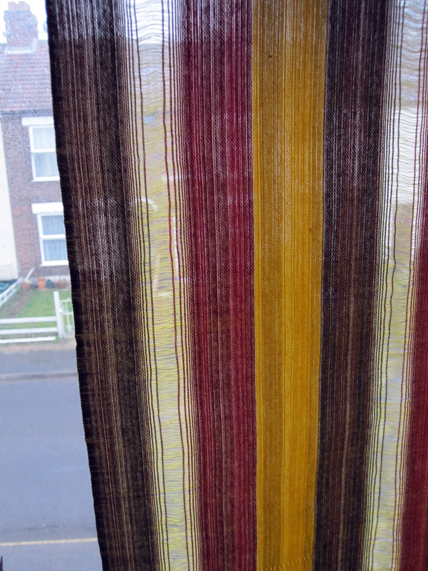
All of the fabrics I have designed this year at uni have been for interiors, mostly window treatments. Here I have displayed and photographed the fabrics in context so that I can get an idea of how well they sit within that context. I found it difficult to photograph the fabric in front of the window because of the way the light comes through. Putting them into context has allowed me to evaluate how they are working and how I can improve them for my next set of weaves. I am pleased with how they look in front of a window although there are a few adjustments I would like to make. For example using a Leno and increasing the contrast between the transparency in the fabrics.
by katie | Mar 20, 2012 | Blog
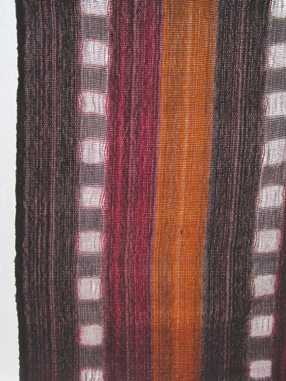
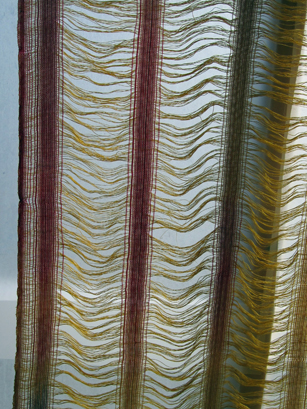
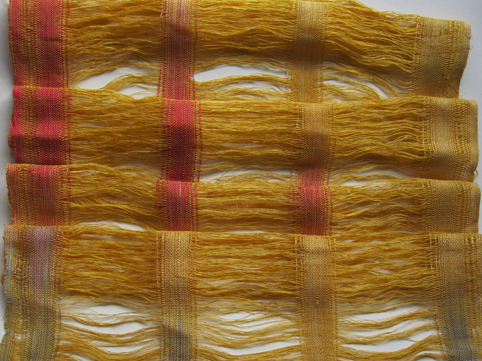
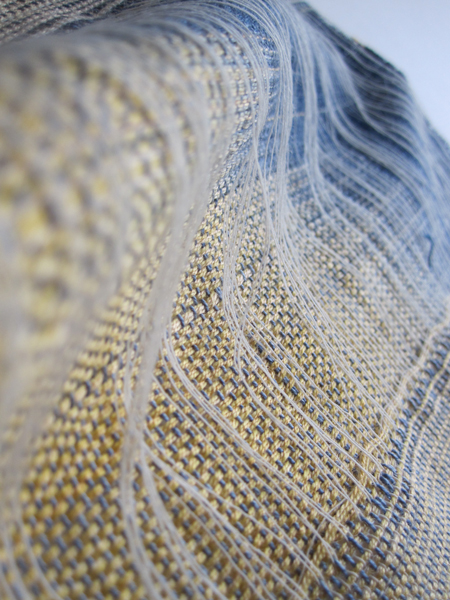
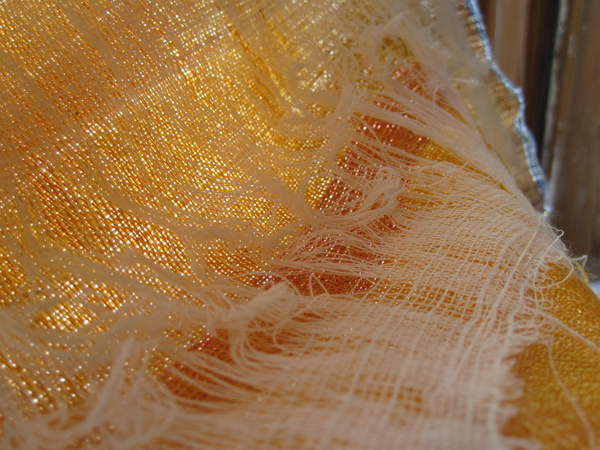
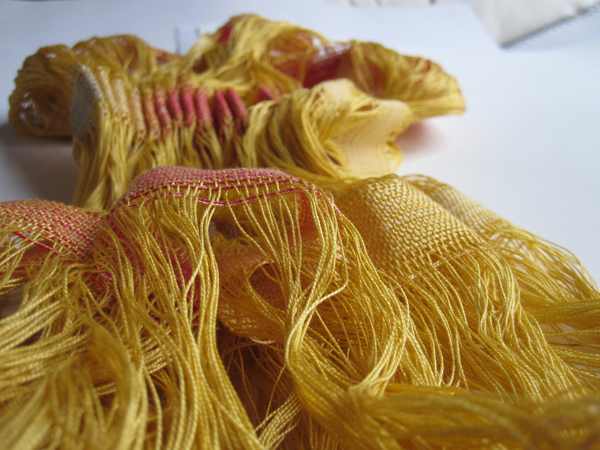
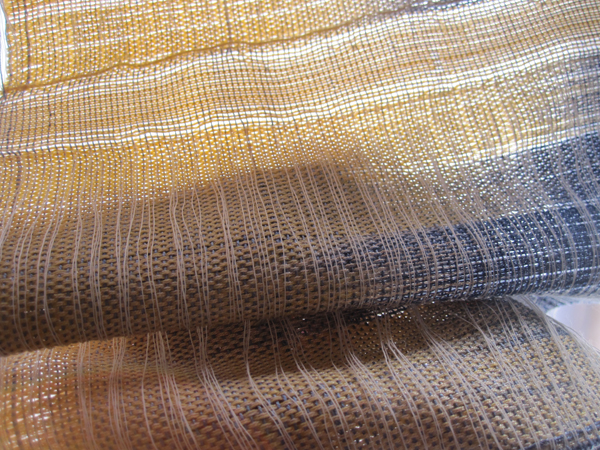
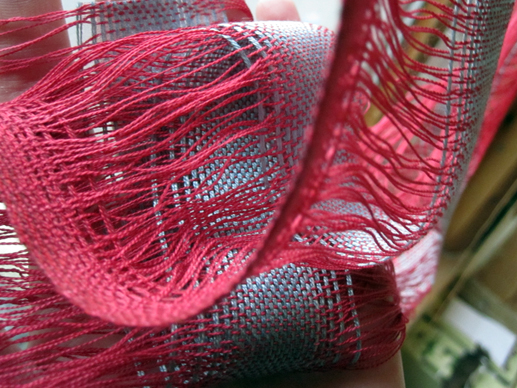
Many of my weaves incorporate long floats. This reflects my visual inspiration, rust. I have used the floats to create a worn look and layers as I have discovered in the rust, but in a more organised way. The floats add texture to the weaves and they hang well on the fabrics.
by katie | Mar 16, 2012 | Blog
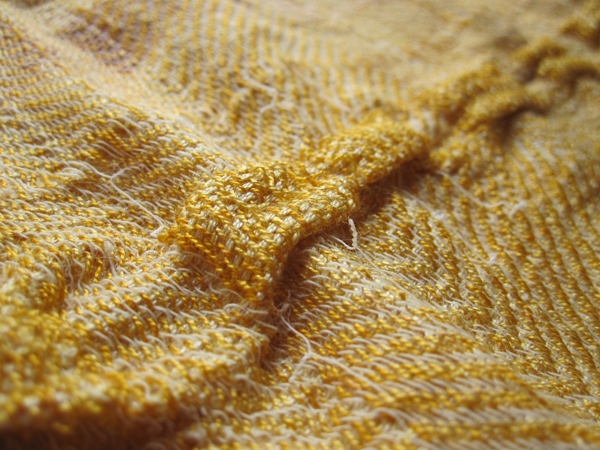
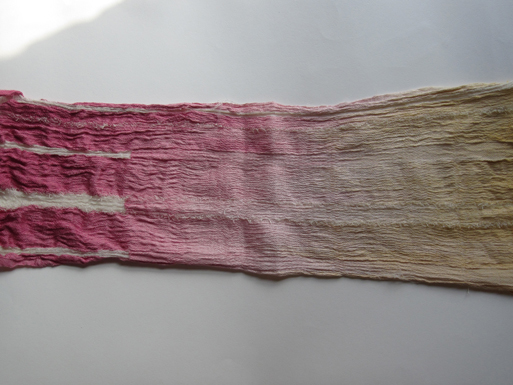
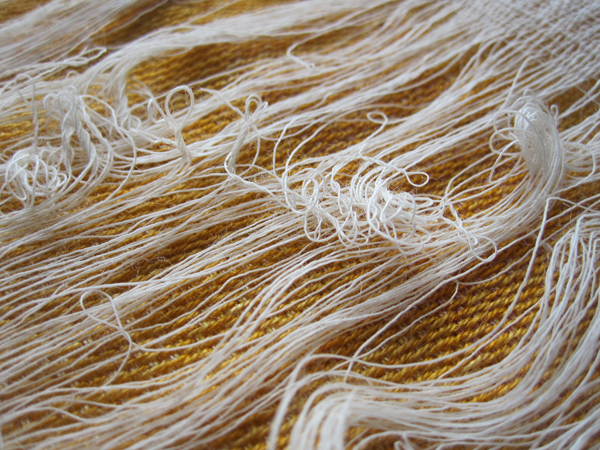
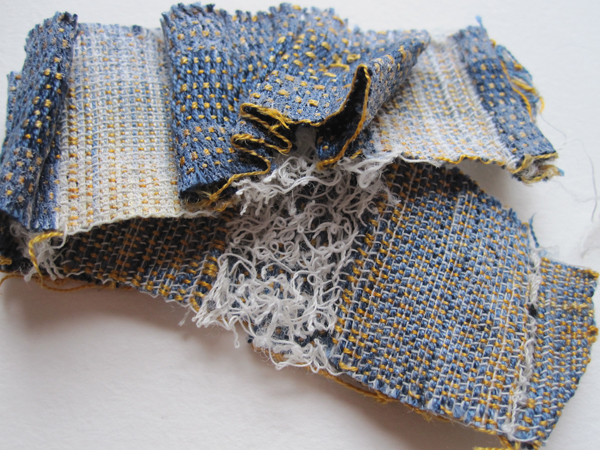
All of these samples below use high twist wool, a yarn that shrinks when put into water. I have used it carefully in particular areas to create the effect I wanted. It gives an interesting stretch to the fabric, I love the way sit twists and curls, adding texture to the weaves. Depending on how and where it is placed it can create more dramatic or subtle effects, as seen below.

by katie | Mar 13, 2012 | Blog
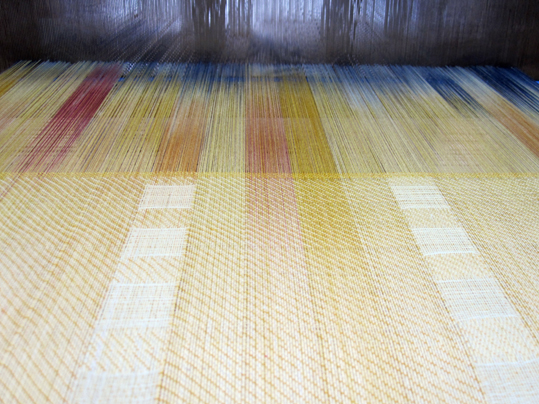
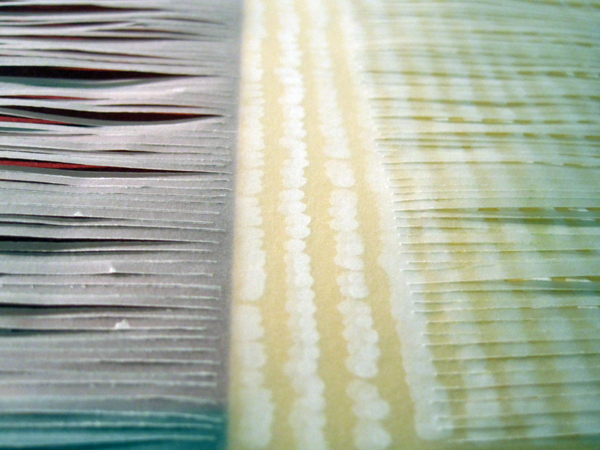
Here I have dyed this warp by printing it using thickened dyes. It took much longer than I thought it would. The yarn had to be washed and cleaned using metapex, mordanted after this. My warp was six metre long, which only added to the difficulty as the print table I used was only three metres. I also had to keep the warp wet while painting the dye on to ensure an even colouring. Having said that I love the slight unevenness of the result, it make it more natural. The subtle variations and tones of the colours added creates an interesting effect.
by katie | Feb 15, 2012 | Blog
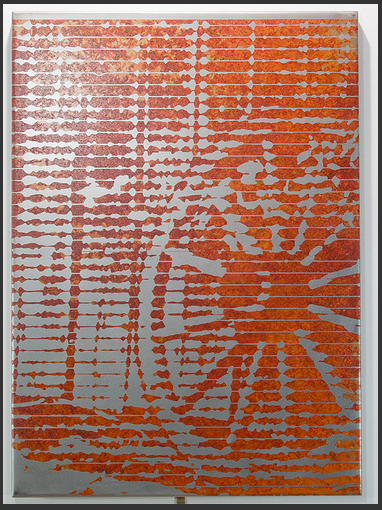
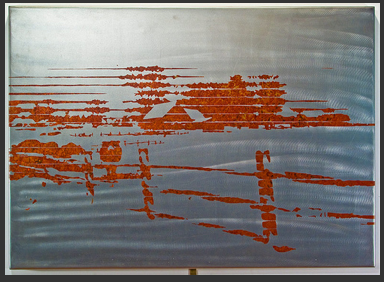
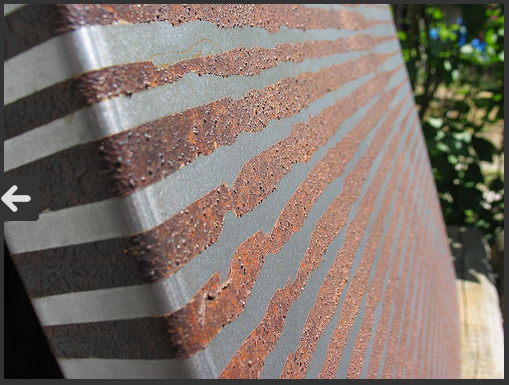
Danno creates artwork using wether, rain, snow and sun. He starts off with a steel panel, some areas are protected so that the will not rust. The panel is then placed outside and the natural corrosion does the rest. He is exploring the natural forces at work around him. Using a line format he creates different images from textures, abstracts and tonal pieces. he is not drawing rust but using the process of rusting to draw with.
http://www.steelandsnow.com/about-the-art/
by katie | Feb 9, 2012 | Blog
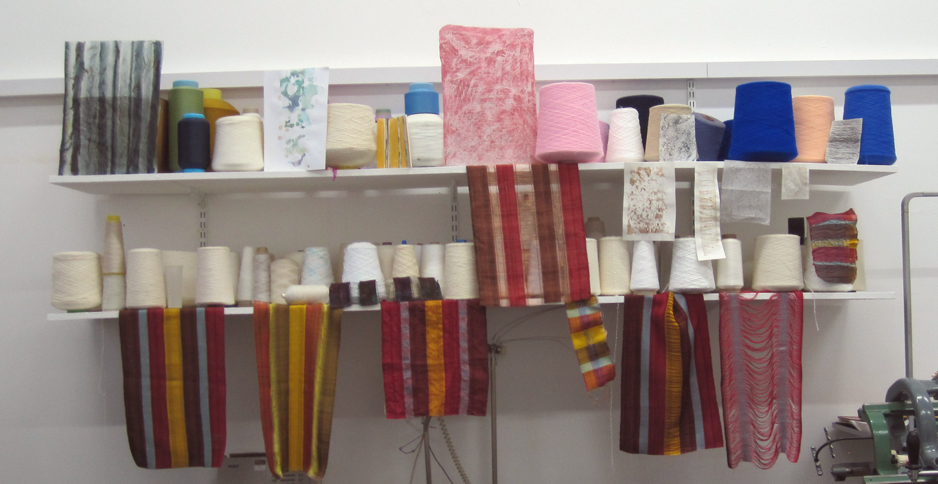
As part of a tutorial we decided to place my drawings with my woven fabrics to decide how the project is progressing. I have been exploring corrosion and developing this inspiration into woven fabrics. Through decay I have been investigating the relationship between light and fabric, how the light can pass through certain areas and not others. Alongside this i have been using yarns and dying to develop colours and textures based on rust. The fabrics have been designed for use in interiors.
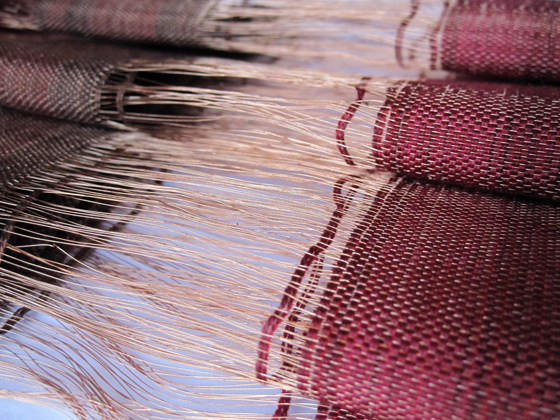
Some of the work has taken on more of an artform, the long floats make certain pieces impractical for interior furnishings, this is due to the experimental approach I have taken. The piece made of long red floats works well, the way it hangs is interesting, the floats have no structure so create a feeling of movement. The middle piece containing the copper is exciting although was designed with sheer window fabric in ming, it does not work. The light needs to come from the front of the peece in order to see it’s full potential.
Placing my drawings alongside my woven fabrics allows me to evaluate what I have been doing. It is working well in all, however I feel the colours are not quite right and I need to incorporate more texture into the weaves.
by katie | Feb 1, 2012 | Blog
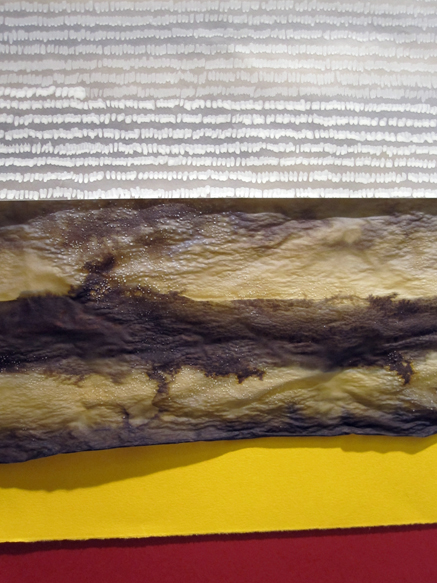
These are a selection of drawing, based around the theme of corrosion. I found I had lots of drawings which were not very exciting. Placing them together and photographing them allowed me to easily play with contrasting the textures, as well as layering and light. This brought the drawings to life, made them much more interesting and useful for my weaving.
by katie | Jan 28, 2012 | Blog
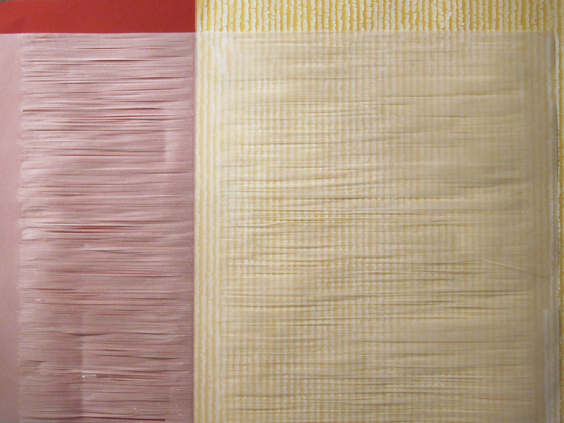
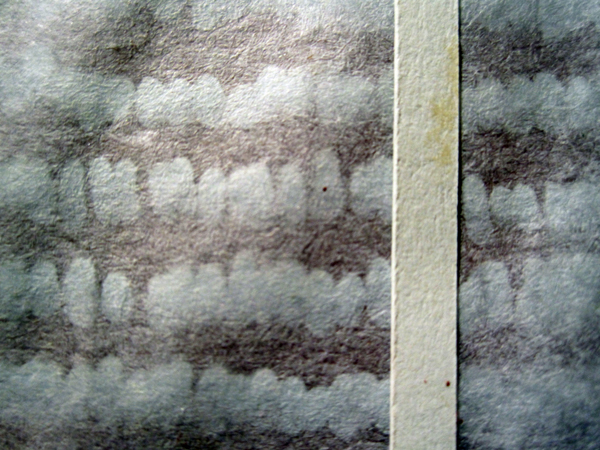
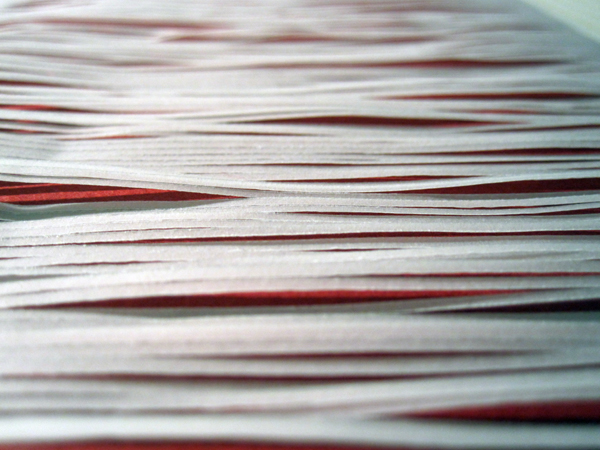
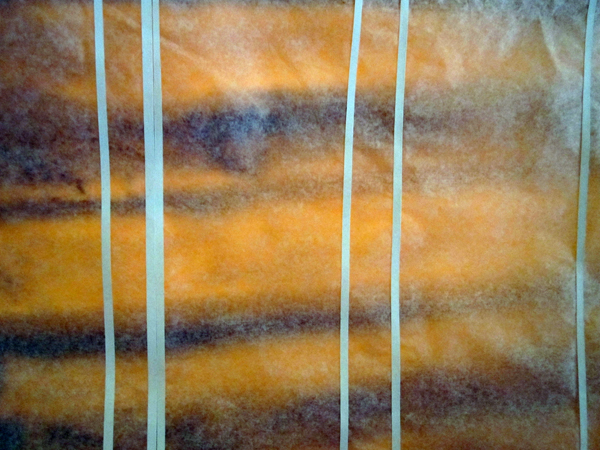
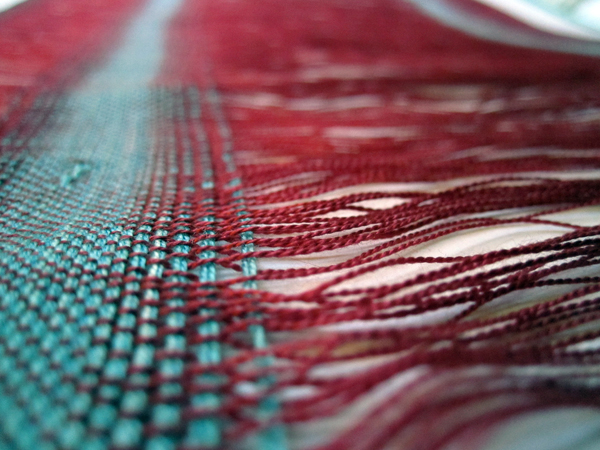
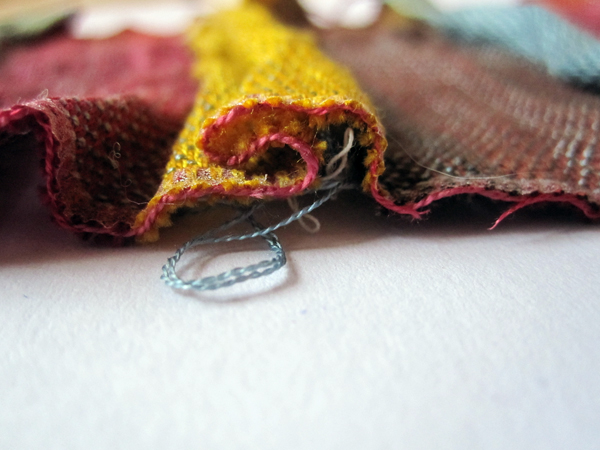
This collection of woven fabrics is based on my visual drawings of corrosion. They are also inspired by Japanese weaving. They are an exploration of light, the way it passes through the fabric or reflects off the surface.

by katie | Jan 10, 2012 | Blog
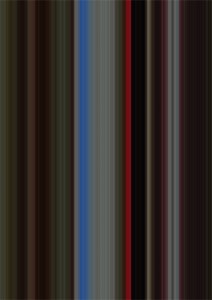
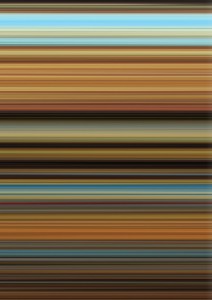
Today I had a really inspiring tutorial, looking through my sketchbook I realised that these stripes could be my weaving. My tutor showed me how I could create more stripes and checks by taking photographs with a slow shutter speed and manipulating them in Photoshop.
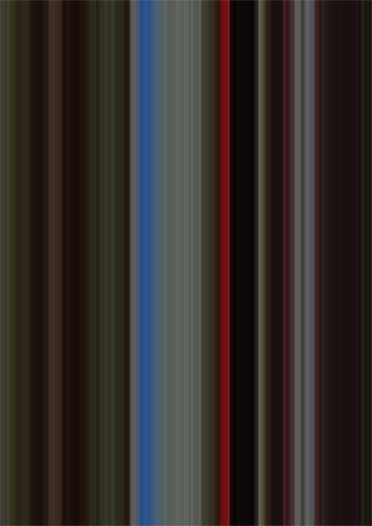
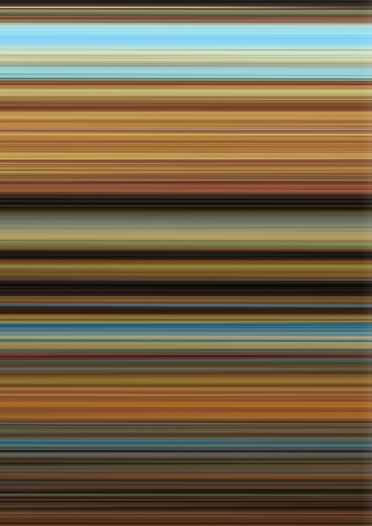
These stripes below were created in Photoshop from my own photographs of rust. It enables me to extract the colour and explore proportions and combinations. These are also useful for designing warps.
..……………… …………..………..
by katie | Jan 6, 2012 | Blog
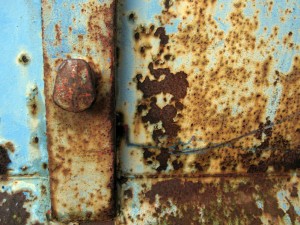
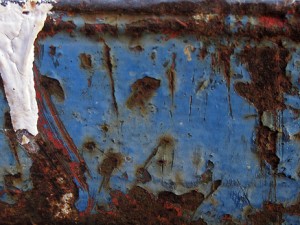
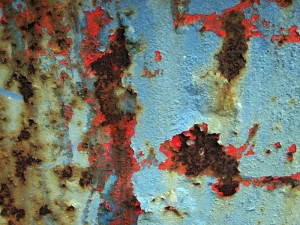
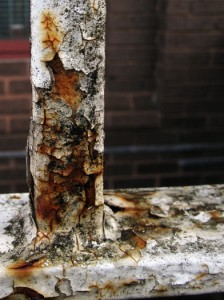
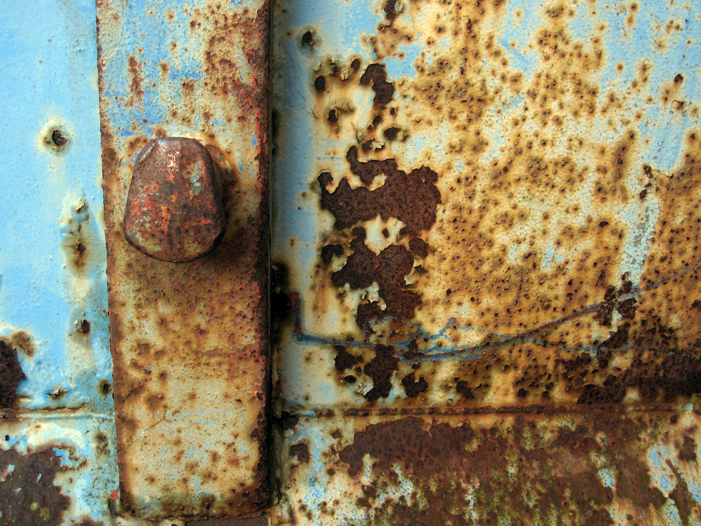
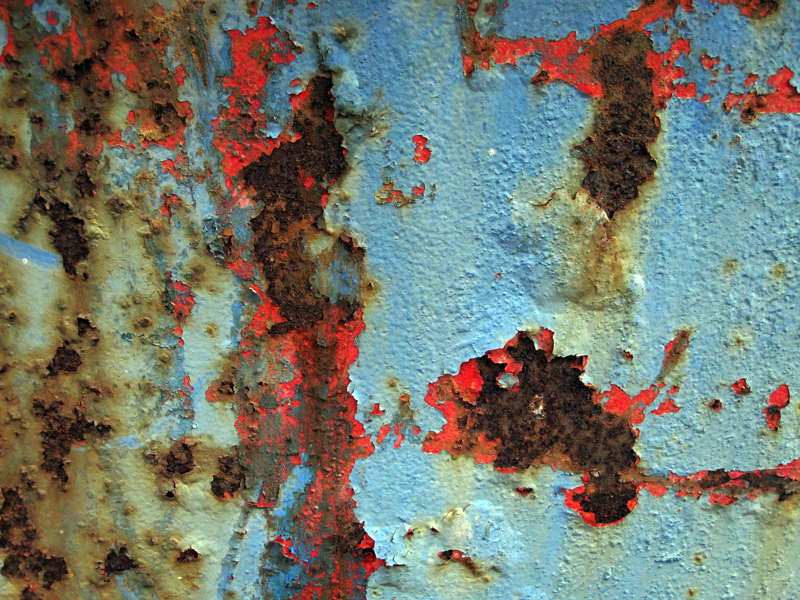
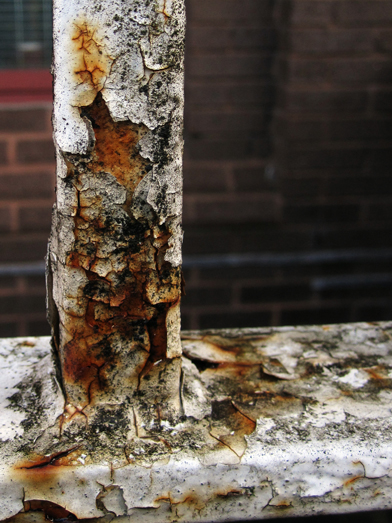
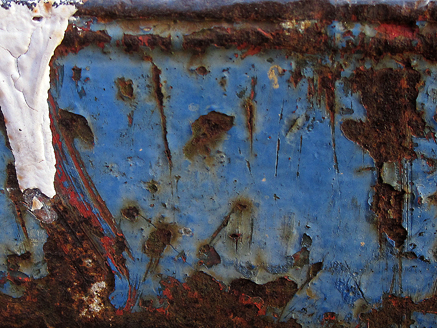
These are a selection of photographs I have taken in Norwich for my final uni project on rust. I wasn’t sure how much rust I would find around the city. While walking to places I decided to take new routes and found some exciting rust. I am interested in how the surfaces decay and reveal the layers beneath, and the changing colours as it erodes away.