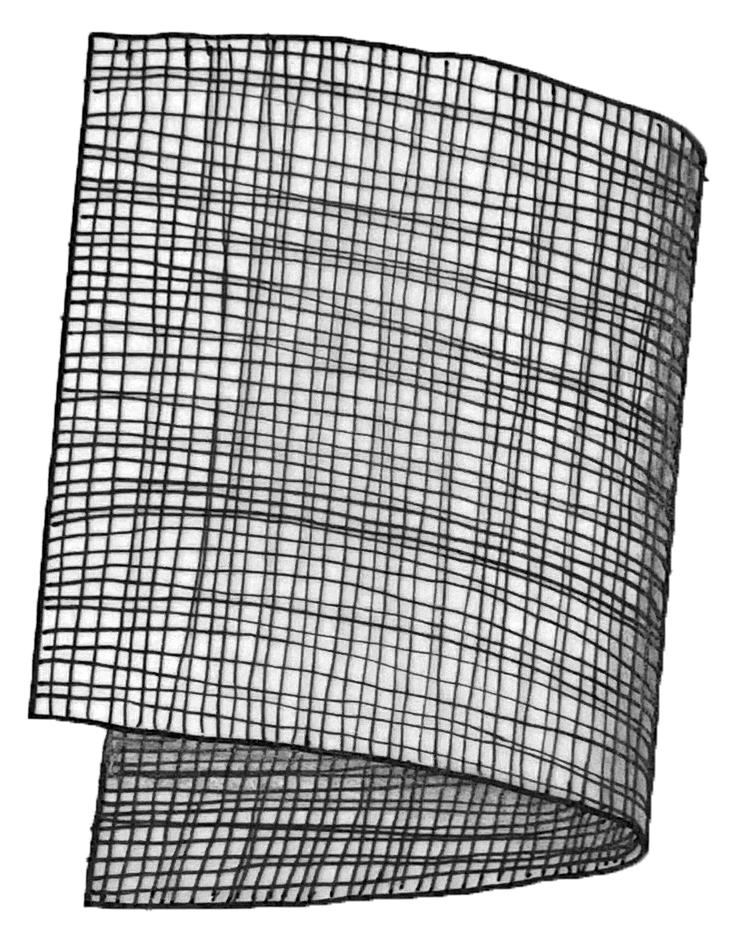
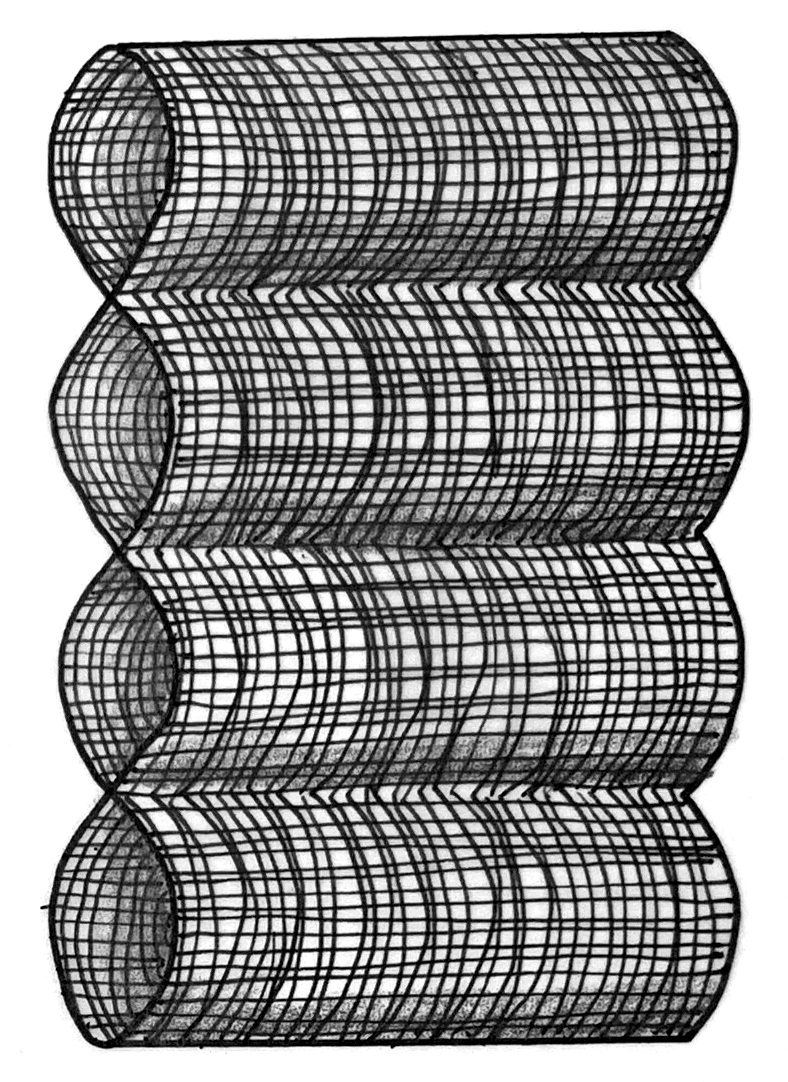
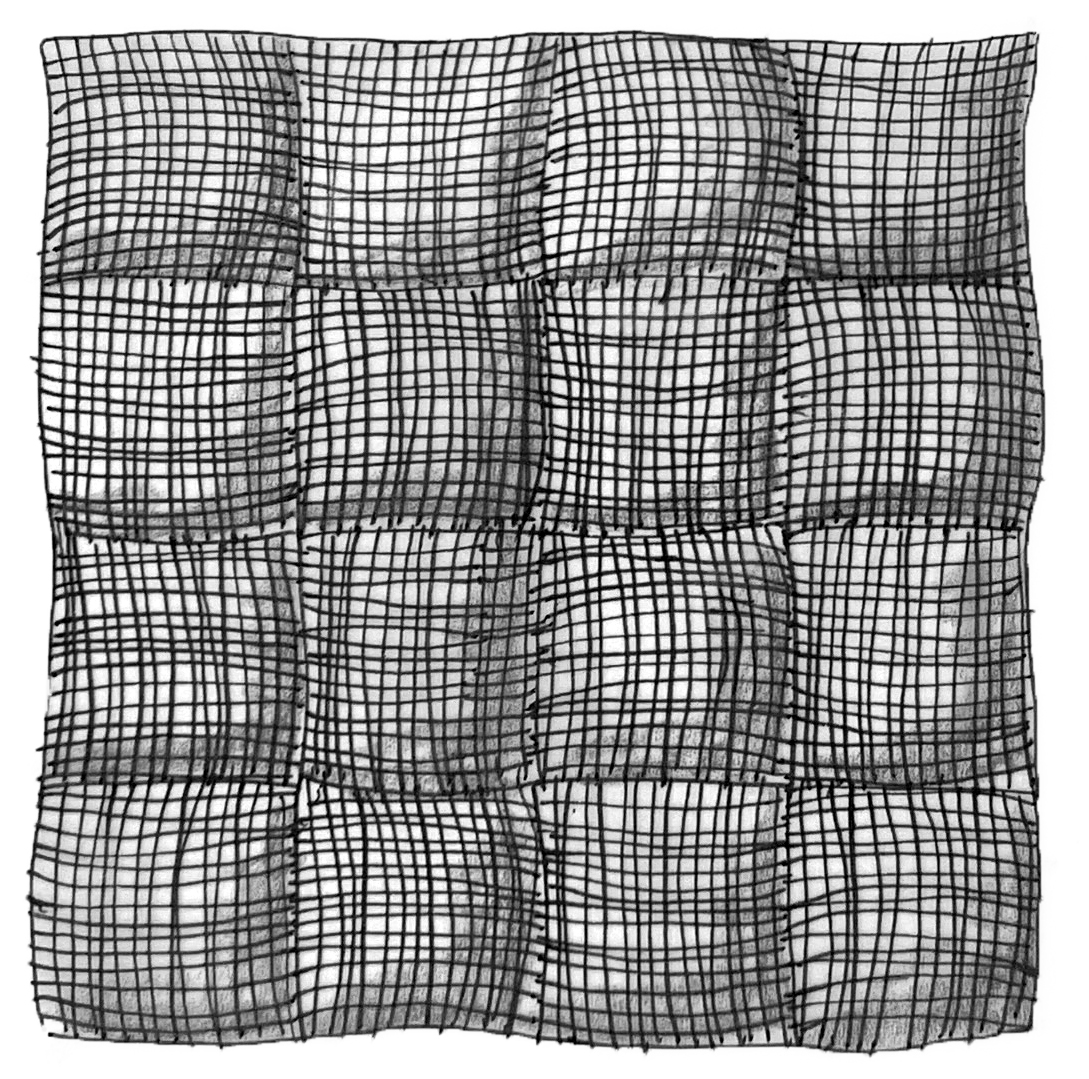
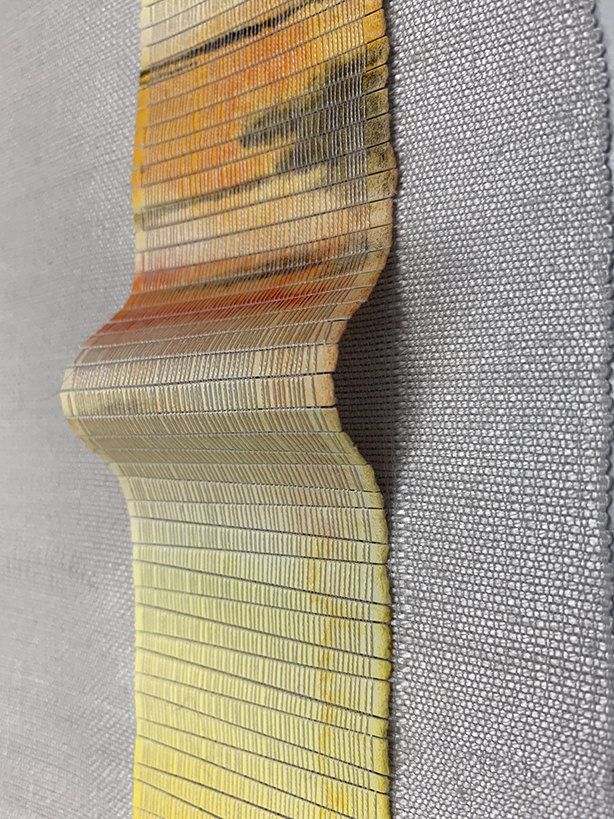
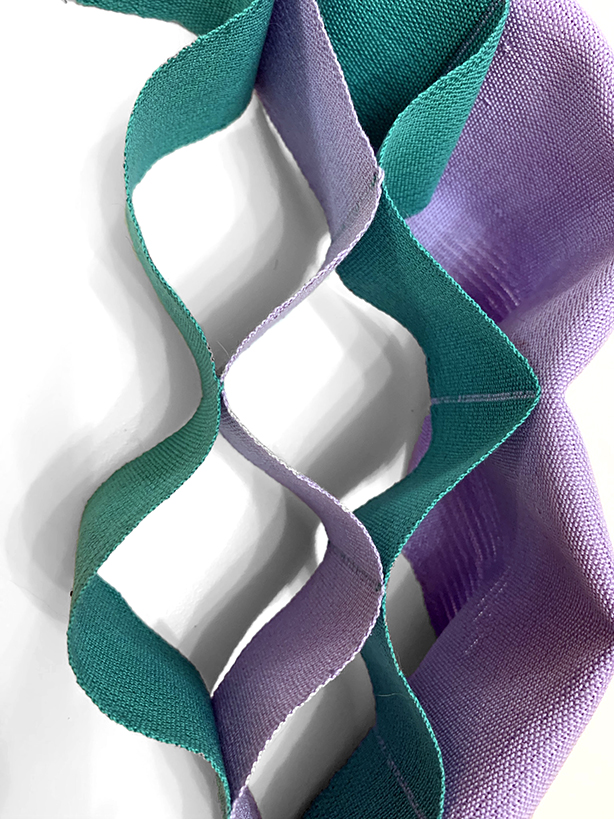
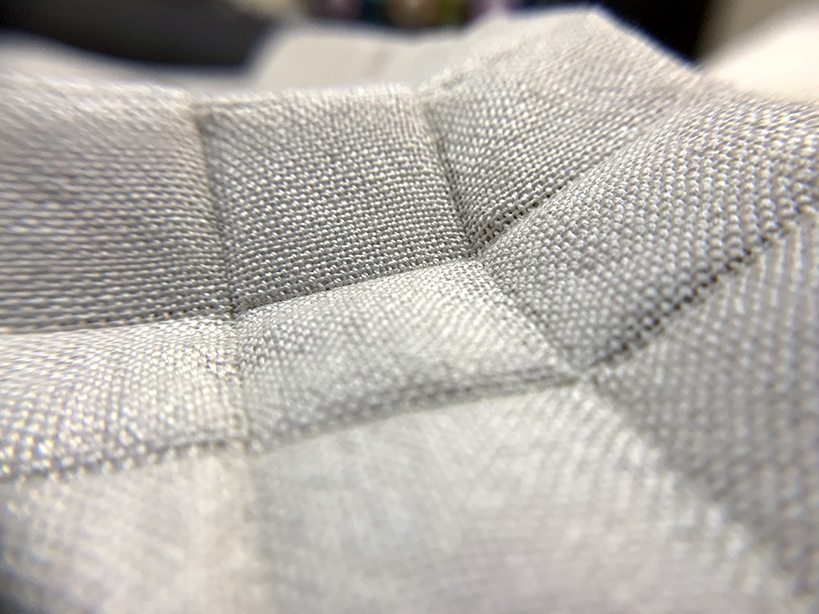
Double cloth is where two cloths are woven simultaneously, one on top of the other. They may be two completely separate cloths or joined in several different ways:
Along one selvedge to open up to double width
Along both selvedges to create a warp-wise tube
At horizontal points to create weft-wise tubes
at various points long the warp and weft to create pockets
One weft yarn may be used for both cloths or a different yarn for each cloth. The cloths wil be joined at the selvedges if just one weft yarn is used.
Set up
A double cloth structure can be set up multiple ways. For me, the simplest way is to have one warp, at double sett, with a straight draft (as shown in the below draft). Then the ends on the odd shafts would be for one of the cloths (e.g. top) and the end on the even shafts would be for the other cloth (e.g. bottom). This only really works well if you want the same yarn type for each warp, and the same weft for each cloth. The warp could be made up with two different yarns but you may end us with one ‘baggy’ cloth due to different yarn properties, particularly the elasticity. The benefit it that a double cloth can be woven on a single back beam loom.
The main thing to remember is that the warp needs to be double sett to allow each cloth to be woven at the desired sett. The ends on each cloth need to be on separate shafts from each other, for example odds/evens, 1-4/5-8. The ends also need to be threaded alternately – one end from the top cloth next to one end from the bottom cloth etc.
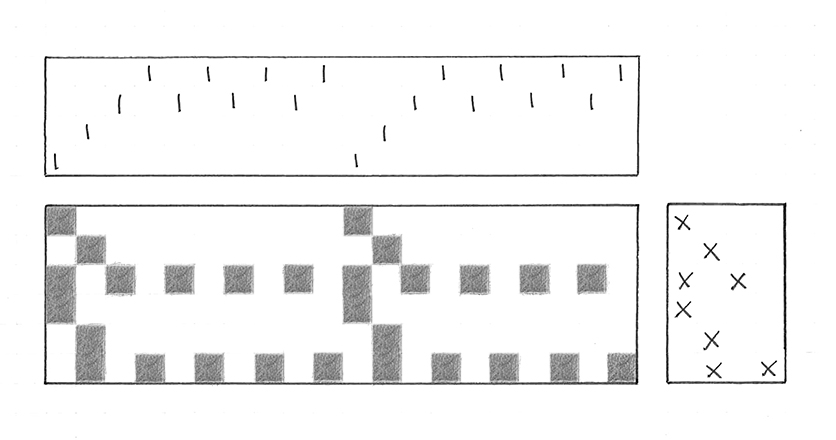
Below is how I choose to draw out a double cloth draft. I have use black/white circles to visualise which warp/weft belongs to which cloth. You’ll see that I have also used ‘o’ and ‘x’. The ‘x’ represents the usual lifting of the shafts to create the structure. The addition of the ‘o’ represents the top cloth ends which will be lifted up out of the way while the bottom cloth is woven.
Most commonly, double cloths are woven using two back beams so that each cloth’s tension can be controlled separately.
Below is an example of a double cloth where one cloth/set of warp ends it threaded on shafts 1-4 and the other set on shafts 5-8. The ends from each cloth need to be threaded alternately to create evenly spaced cloths. The lifting plan shows how you can swap the cloths over, going from the black cloth on top to the white cloth on top. This would be a way of creating weft-wise tubes.
The draft could be further developed by placing blocks in to create multiple pockets. E.g. blocks of shafts 1/2, 3/4, 5/6, 7/8. This allows you to swap over the top and bottom cloths in both the warp and weft direction.
Weaving
The basic principle of weaving a double cloth if that you would weave one pick of the top cloth. Then lift all of the top cloth ends up and weave one pick of the bottom cloth. And repeat. The above has only shown plain weave structures. Therefore, four picks is one repeat. Depending on the number of shafts available other structures can be woven in each cloth, for example, you may want a 2/2 twill on the top cloth.
You may need to reconsider the method above if you have very different yarns for each warp. They may require different setts and therefore alternating the ends threaded may not work.
If different weft yarns are used in each cloth one cloth may build up more quickly than the other. This could be compensated for by weaving more picks in one cloth before weaving the next cloth. For example, weaving two top cloth picks for every one bottom cloth pick.
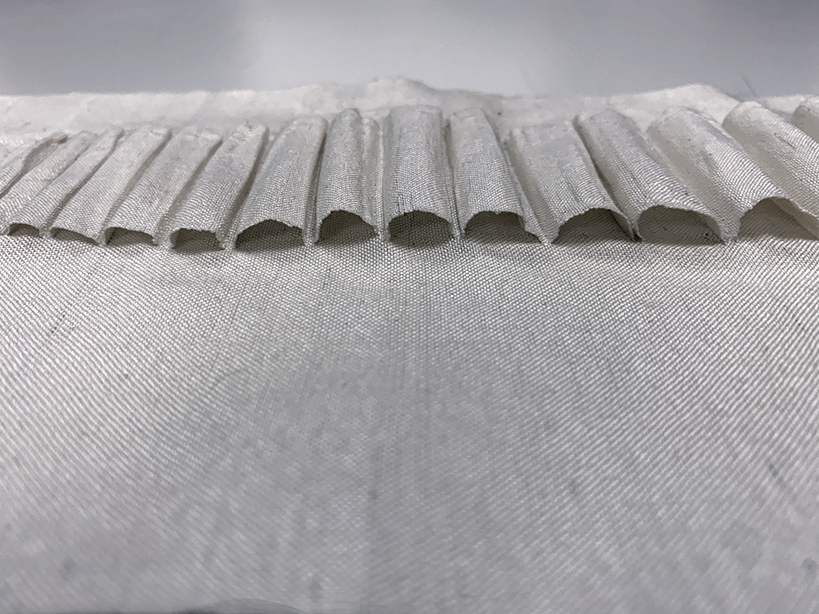
Once you get the hang of weaving two cloths simultaneously you’ll be able to think about other things you can do with this structure: Pleats are made by weaving a double cloth where the top cloth is woven more quickly causing an excesss of fabric. This excess is secured to the bottom cloth with a plain weave at intervals. More than two cloths can be woven simultaneously. I have woven up to four. As long as you have at least two shafts for each cloth you can weave as many as you like.
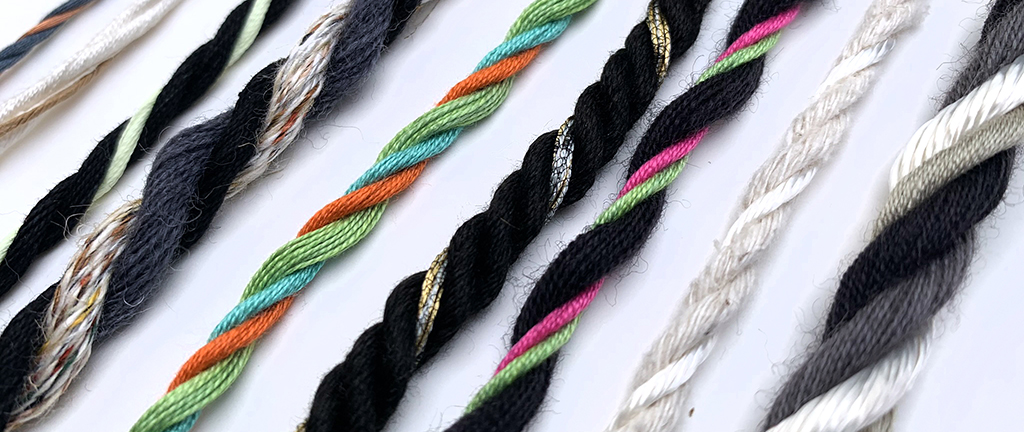
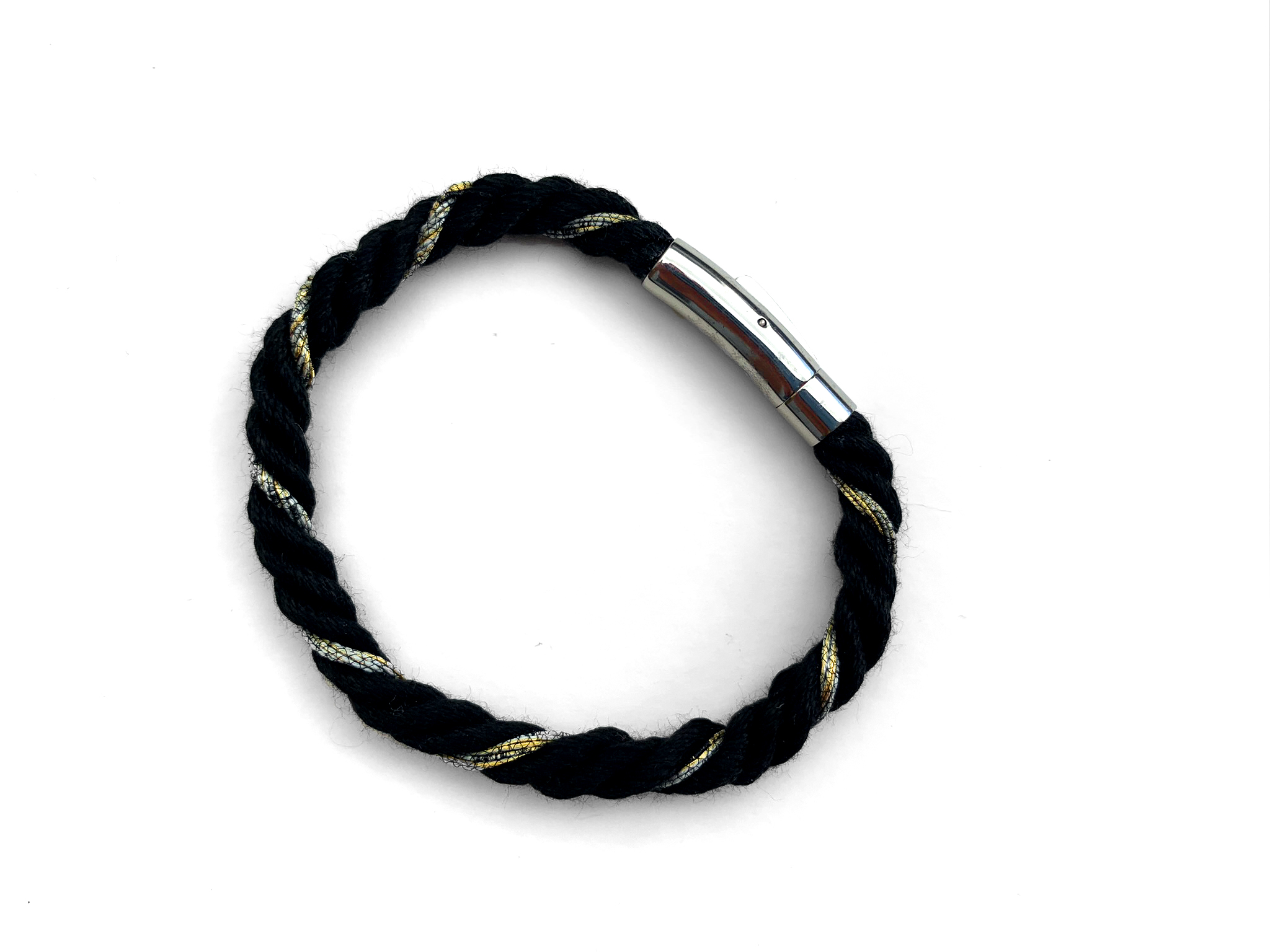
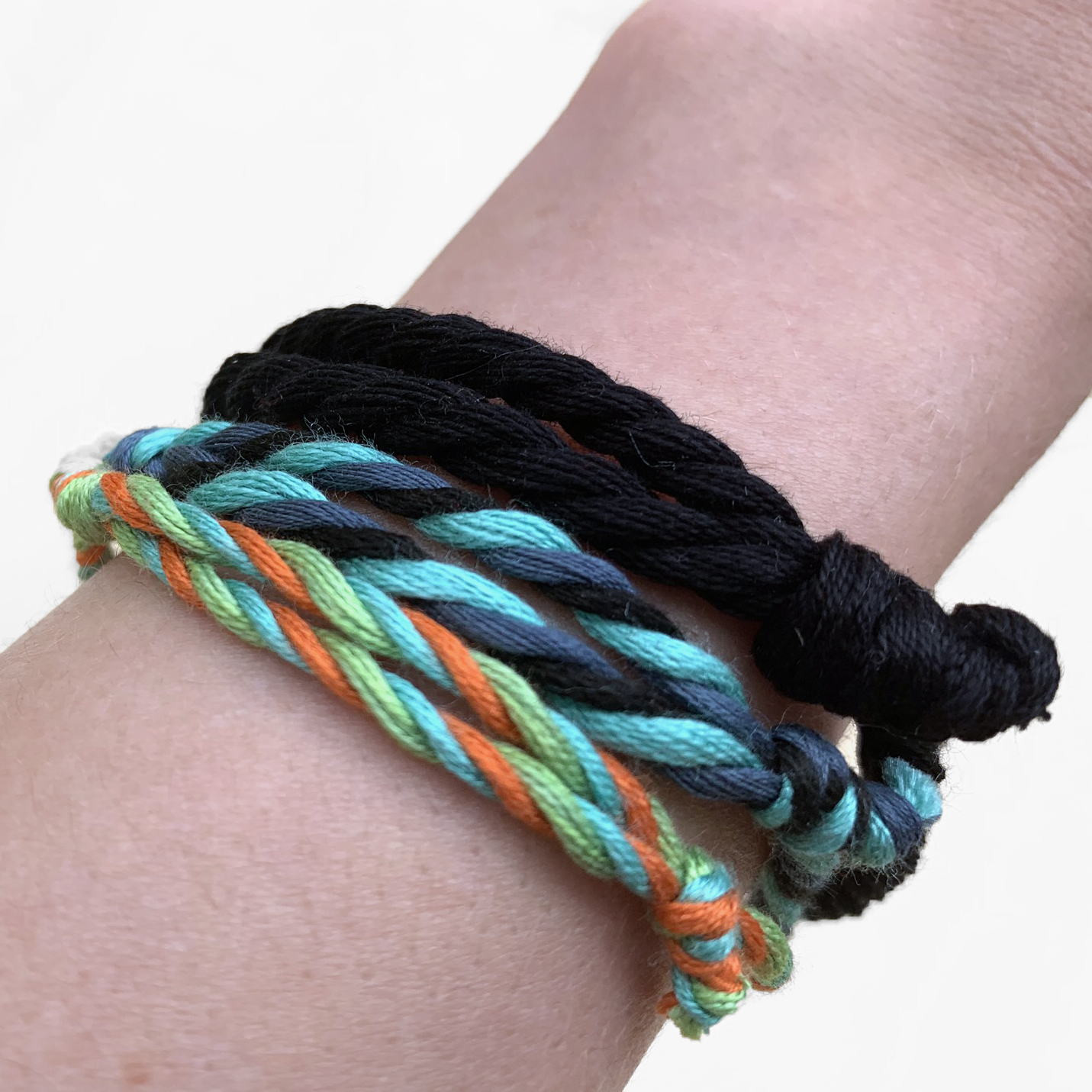
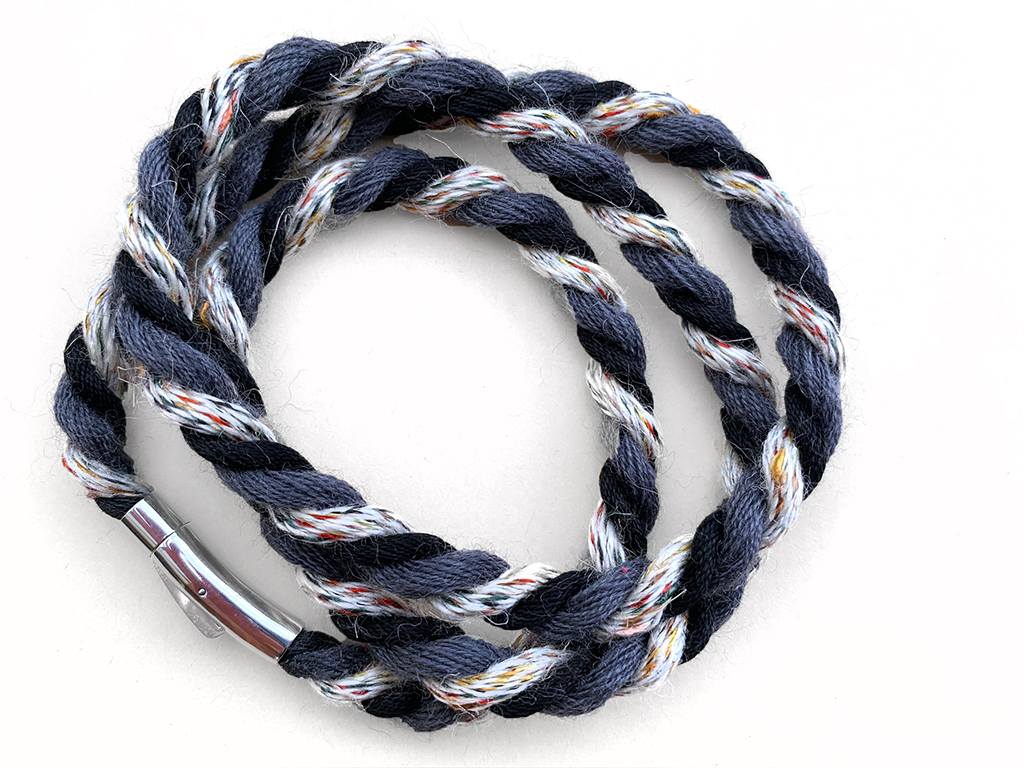
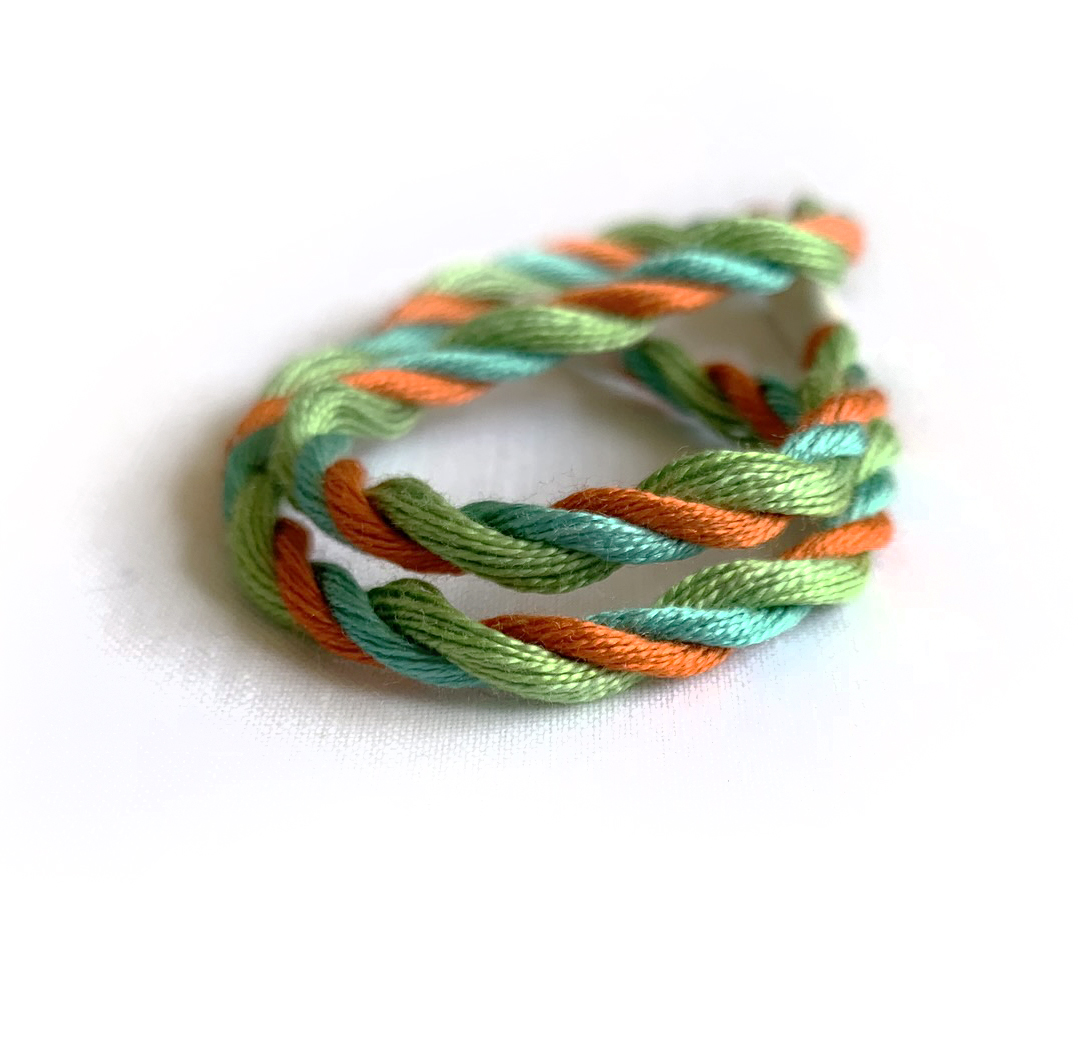
Cord making can be a simple way of constructing new yarn with little equipment.
Cord can be used in constructed fabrics, woven, knitted, crocheted etc. as well as for appliqué techniques. Cords are also commonly used in passementerie, tassels, trimmings and jewellery.
Materials
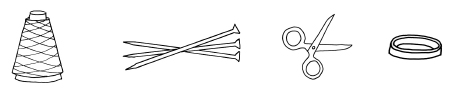
To make a cord you will need:
yarn or any type of thread
knitting needles (a pen/pencil will also do the job)
scissors
masking tape
Method
To start with you will need to make a warp. The size of this warp will depend on the yarn you are making it with and the size cord you want to make. To start with try making a warp of 20 ends, 2.5m long.
If you do not have a warping mill/frame then you can wrap the yarn around a chair back and slip it off the top. Alternatively you could measure each piece of yarn e.g. 20 lengths of yarn each 2.5m long.
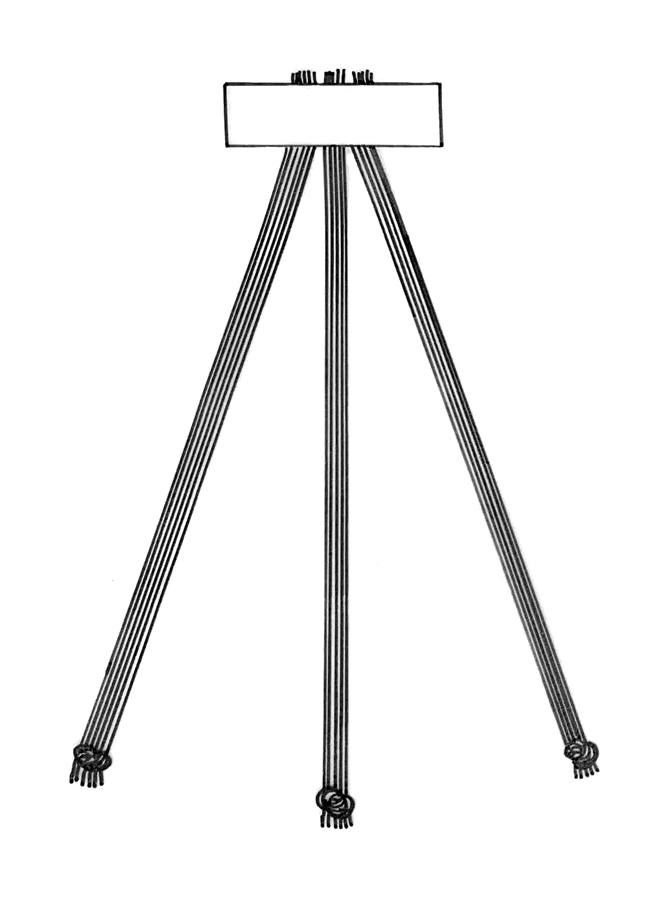
Cut three 75cm lengths of the warp then tie a knot in the end of each group of yarns and secure them to a table using masking tape. The knot helps stops the yarn from slipping out underneath the tape.
Alternatively, tie the ends to a door handle or fixed point. This is useful when making longer lengths of cord.
Tie another knot in the other end of each group.
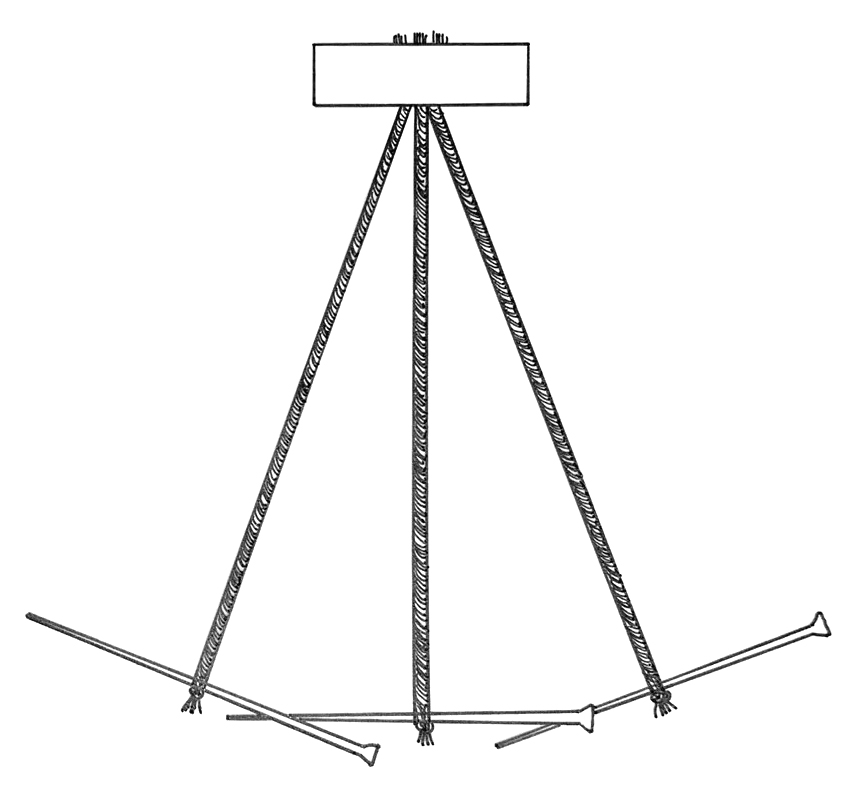
Slip a knitting needle (or pen/pencil) in to a group just above the knot in the free end. The knot keeps the yarn taut around the knitting needle.
Spin the knitting needle away from you (or in the opposite direction of the twist in the yarn) to add twist to the group of yarns. Add as much twist as you can without the yarn turning back on itself. Rest the knitting needle down on the table.
Do the same for each of the other two groups of yarn. ideally there should be the same amount of twist in each group.
To be accurate count the number of time you spin the knitting needle. it should be the same for all three. You can then work out the number of twists per meter (TPM) or twists per inch (TPI). Don’t get bogged down with this but it can be useful information to record.
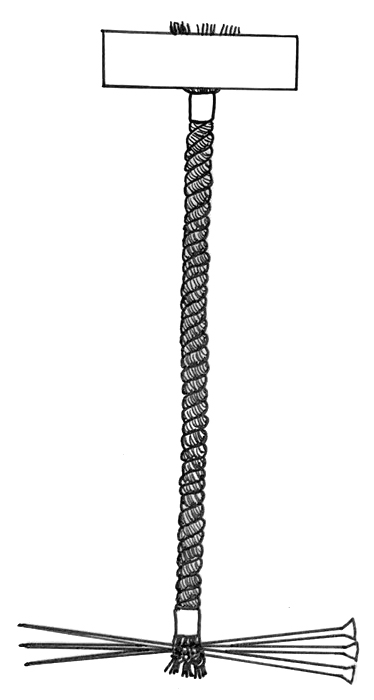
Once all of the groups have been twisted, hold all of the knitting needles together. Twist all three towards you (or in the opposite direction of the first twists). This will bring all three groups together to make the cord.
Using an elastic band to hold the needles together while twisting can make it easier.
Twisting in opposite directions give the cord strength and stability.
Put as much twist in to the cord as you can before it starts to twist back on itself. Keeping a record of the number of twists is useful information to record.
To stop the cord unravelling wrap some masking tape around each end and then cut through the tape.
Notice that as twist is added at each stage the length decreases. The cord is less than 75cm long when finished. The take up will be different for different types of yarn and different size warps. Keeping a record of the length of warp used to begin with and the end length of cord will help when planning cords.
Once you have got the hang of cord making try experimenting with the following:
type of yarn – cotton, silk, wool, synthetic, metal, paper, sewing thread, embroidery thread
thickness of yarn
number of ends per warp
length of warp cut to make cord
number of groups of threads – two is minimum
try combining yarn type/thickness/colour in one cord
I struggled to find any information online about gating a countermarch so thought it would be useful to share my knowledge with you.
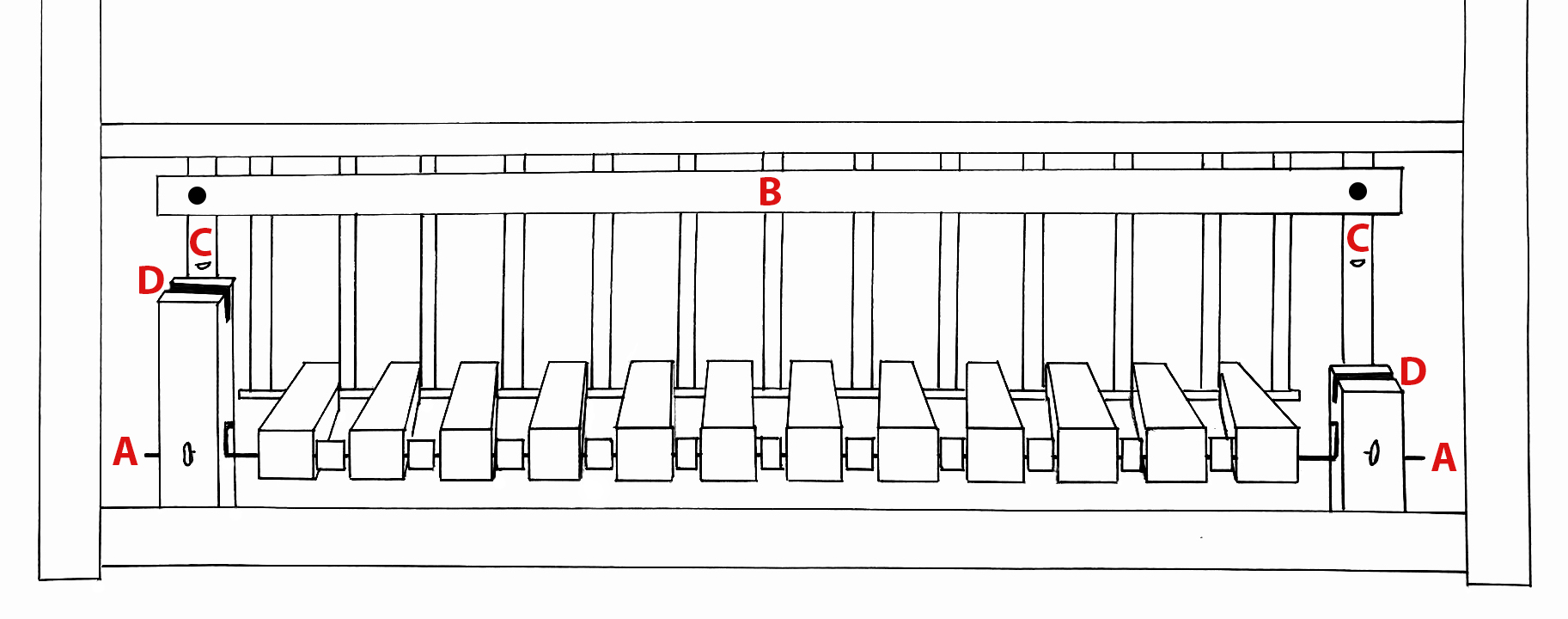
If you are using 8 or more shafts you may find that the shed is small. When using this number of shafts it is advisable to gate the loom. This is a process which opens up the back shaft a little more to give a clearer shed.
A – Between the two A points is the treadle pivot bar (the bar the treadles attach to at the back of the loom). B – Control bar. C – Notches on the treadle spacer. D – Top treadle position. The treadle pivot bar will sit askew in these grooves.
Method
Before you start make sure the pins are in the castle, the shafts are at the right height and the shafts/lamms are horizontal/straight. The treadles need to be untied.
With the treadle pivot bar (A) in the lower (weaving) position, set the top of the control bar (B) level with the notches (C) on the pedal spacer.
For the back shaft only (back two lamms) tie each treadle tightly against the treadle control bar.
Loosen the treadle control bar and put the treadle pivot bar in top position (D).
Push the treadle control bar tightly against the treadles and tighten nuts.
Firmly tie the rest of the treadles to shafts.
Put the treadle control bar back in the upper position out of the way and put the treadle pivot back in the lower position, ready for weaving.
Not all countermarch looms are the same but contact me if you are having issues.
When adjusting a countermarch loom always ensure the pegs are in the castle.
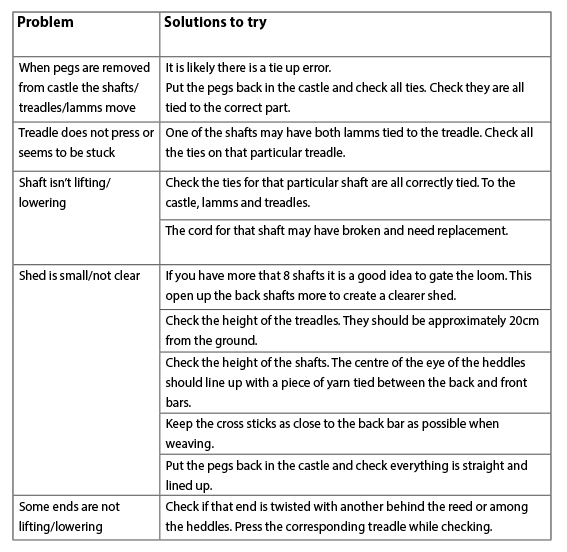
If you are struggling to find a solution put the pegs back in the castle and check everything has been set up correctly. Starting at the top of the loom check all ties are still tightly tied and that the shafts, lamms and treadles are exactly straight/horizontal and all line up. This is the main cause of problems on a countermarch loom
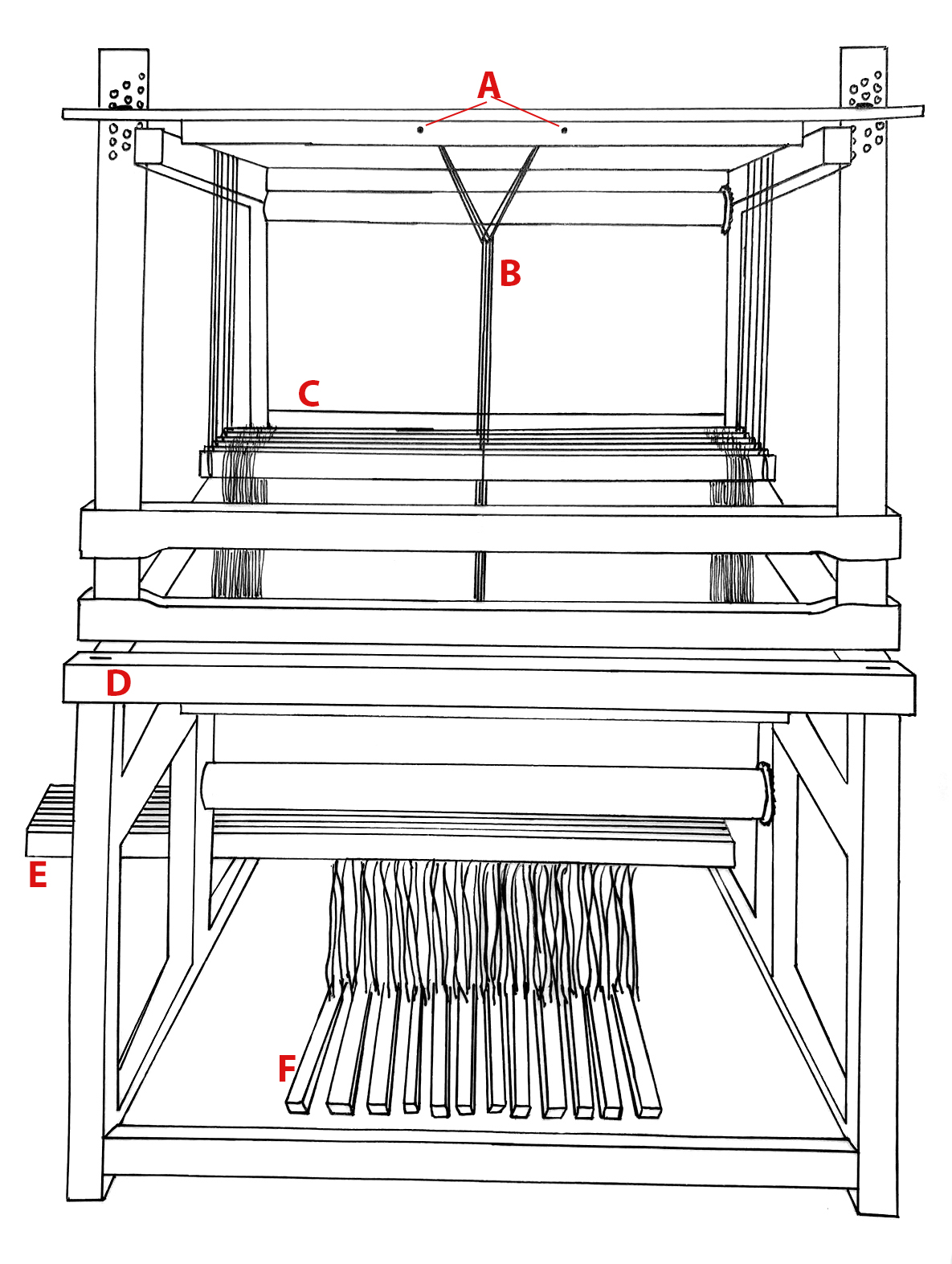
I have a 12 shaft countermarch loom and I have seen these sorts of looms are often for sale on second hand websites. However, there is not much information online about setting up these types of looms so I thought I would provide some tips about setting up a countermarch loom. It is not a step by step guide but feel free to contact me if you need any more in depth information.
A – pegs in castle B – ties that attach the lamms to the castle C – back bar D – front bar E – lamms F – treadles
The most important thing to remember when setting up/adjusting your countermarch is… Never adjust your loom without the pegs in the castle. Make sure everything is horizontal/vertical and precisely in line. It is very tempting to get everything ‘straight enough’ but it really is worth taking extra time when setting up to ensure that everything really is straight and lined up.
Shafts
Put the back shaft in first then progress forward until you tie in shaft number 1. Make sure all shafts are straight and the same height.Tie a piece of yarn from the back bar to the front bar, left and right sides. The centre of the heddle eyes should be in line with the yarn.
Lamms
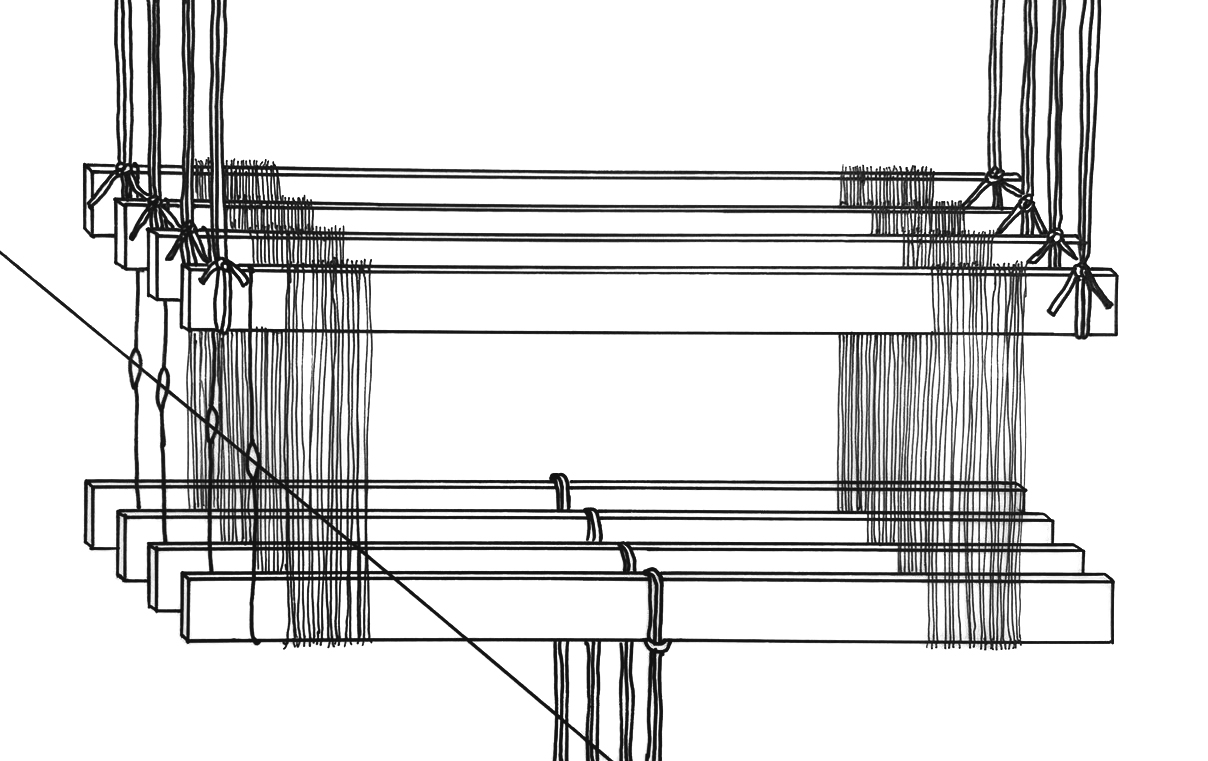
The Lamms need to be exactly horizontal and all the same height. Every other lamm is tied to the castle and will lift the shaft. Equally every other lamm is tied to the bottom of the shafts and will lower the shaft. The lamms also need to be tied to the treadles below. Tie the treadles according to the structures to be woven. Remember every shaft needs to be tied to every treadle used. There is no need to double knot the lamm/treadle ties. This is unnecessary and will make undoing them very difficult. Below is how to tie the lamms to the castle, shafts and treadles.
The treadles should be approximately 20cm from the ground. Adjust this to make them a comfortable height to work with but don’t do them too high.
The loom is now ready for the warp.
Before you put the warp on the loom take the pegs out of the castle and check everything sits straight and level. You may find that everything moves when released. If this happens put the pegs back in and double check if everything is tied up straight. This is also the time to check the treadles are tied up correctly. Press each one in turn to check the right shafts are being lifted/lowered. It will be easier to correct at this stage before the warp goes on. Put the pegs back in the castle to stabilise everything until ready to weave. Make sure the front apron is tucked behind the knee bar when you tie the warp on. This ensures space for your legs while weaving.
A – front bar B – knee bar C – front roller
I have not covered how to tie up the treadles to create structures, this will come in another post.
Making heddles is a great skill to have. You may need to make all your heddles which will save you having to buy them (although this would be time consuming) or make additional ones when you don’t have enough to complete threading. They can also be added on to a shaft while setting up to correct a threading mistake which could mean you don’t need to rethread.
To make a heddle:
Choose a strong, smooth yarn. A medium weight, smooth cotton yarn works well.
Cut a length of the yarn which is double the height of the shaft plus 10cm.
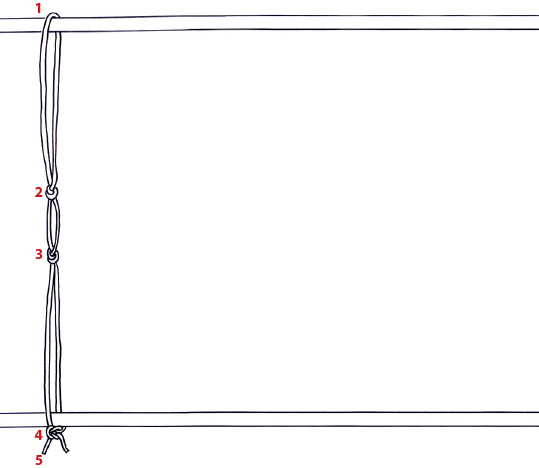
Fold the middle of the yarn over the top of the shaft (1).
Move it near an adjacent heddle on the same shaft to use to compare the position of the eye.
Tie an overhand knot where the top of the heddle eye should be (2).
Tie another overhand knot where the bottom of the eye should be (3)
Bring the bottom of the down each side of the shaft and tie underneath with a reef knot to secure in place (4). It should be taught but still able to move along the shaft.
Cut the excess loose ends off (5) so they will not get caught while weaving.
It doesn’t really matter how you tie the heddle. As long as the yarn is secure around the shaft and the eye in the right place the heddle will do the job.
Corduroy has had a bit of a revival in recent years and it is a great fabric to play around with weaving. It’s a fairly simple structure which only requires four shafts.
Corduroy is a ribbed fabric with a velvet like-feel to it. It has warp-wise ridges which are cut to create a pile. Due to their structure corduroys tend to be a heavier fabric and used for clothes such as coats, trousers, suits as well as for interiors.
When manufactured the ridges (ribs) tend to be quite narrow. The ribs are called ‘wales’. For standard clothing the number of wales per inch is around 10-12 but can vary from 6 (jumbo cord) to 18 (needle or pin cord).
The ribs are made up of stripes of weft floats with a narrow plain weave between them which is there to secure the floats down. The ground cloth behind is what holds everything together. These floats are cut down the center to create the characteristic pile.
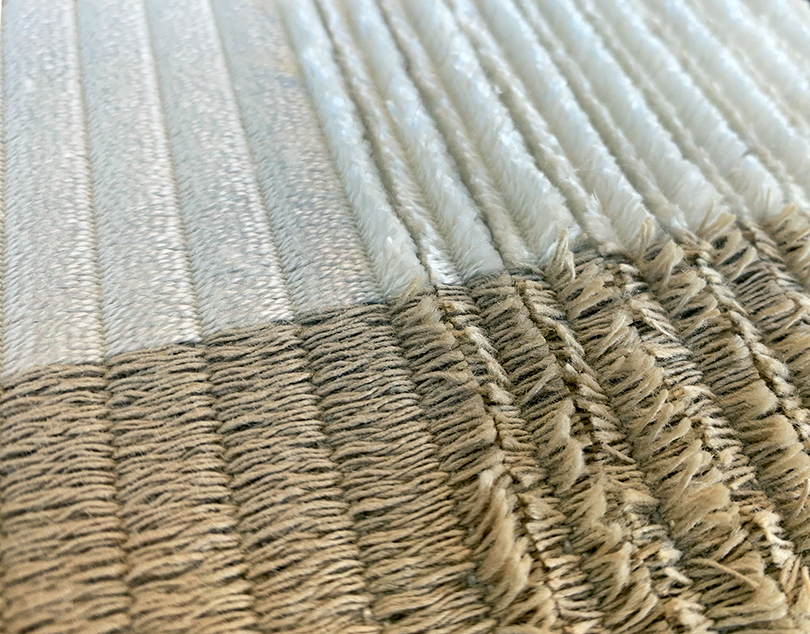
Below is the woven structure I used to weave my corduroy. I did make mine super chunky as you can see from the fabric pictures above. This was to allow me to easily see what was going on.
The corduroy below only uses four shafts. Two are for the plain weave background and the other two secure the floats down with plain weave. The picks alternate between one pick of weaving the plain weave background and two which weave the floats.
The corduroy in the image above was woven using 2/20nm spun silk and tussah silk. It was intested to see what effect the tussah silk had in comparison to the spun silk in terms of texture. The spun silk is so soft and luxurious while the tussah is more spikey. It would be fun to experiment how different yarns effect the texture of the pile.
When weaving I beat down quite firmly to ensure that the ground cloth was strong and the plain weave would hold the floats in place when cut. It is only the plain weave on shafts 1 and 2 that stop the floats from coming out.
To cut the floats I found it best to cut them while the fabric was still on the loom and under tension. I cut them as I went along, once I had woven about 5cm or so. The scissors need to be very sharp, small and pointy. The first couple of pairs of scissors I used were not small and sharp enough. Every time I cut the floats the scissors just pulled the weft floats out of the structure. It may take a few tries to find the right ones and of course as the width of the ribs gets smaller the scissors need to get smaller too.
A twill can also be used for the ground cloth. This will enable the cloth to be beaten down more and increase the density of the floats making a more luxurious fabric. Weaving the floats so that they are not all exactly the same width will also give a more rounded shape to the ribs.
A lot of fun fabrics could be created by varying the yarn type, width of rib and where the floats are cut (do they all need to be cut)?
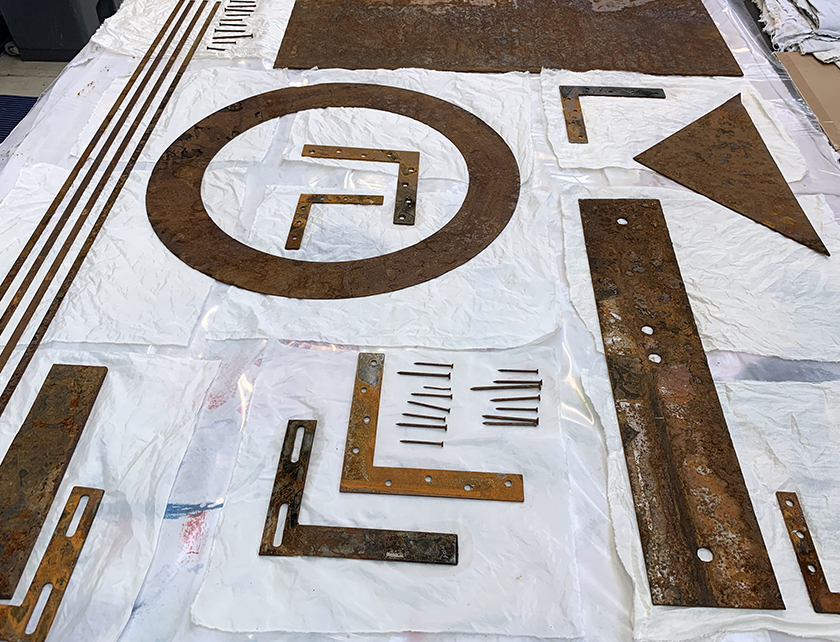
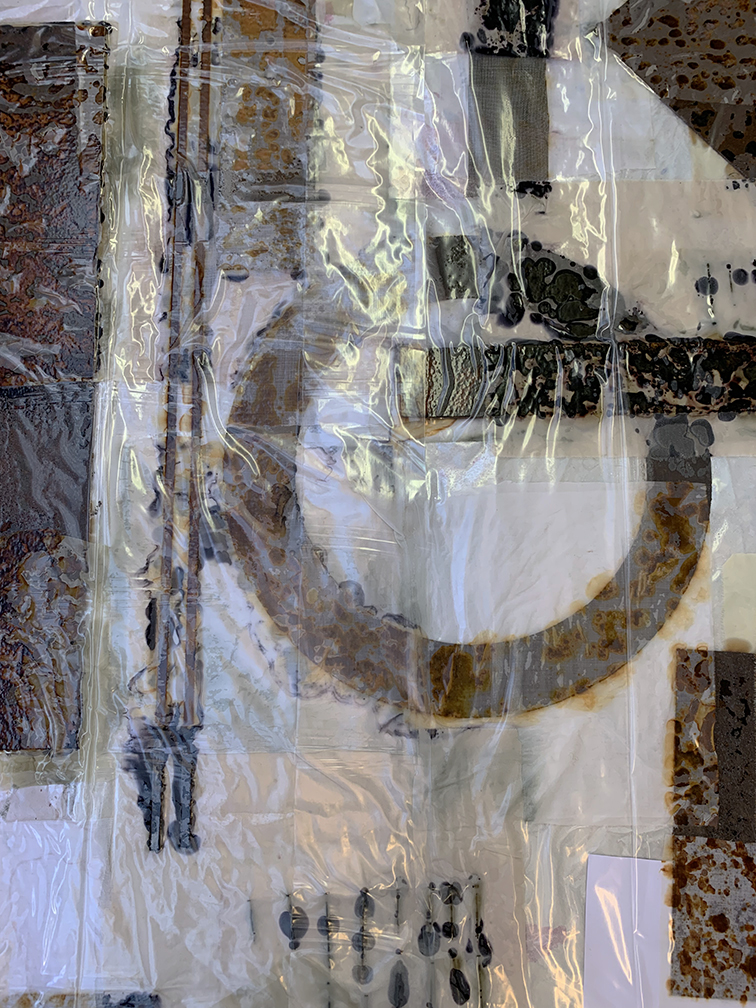
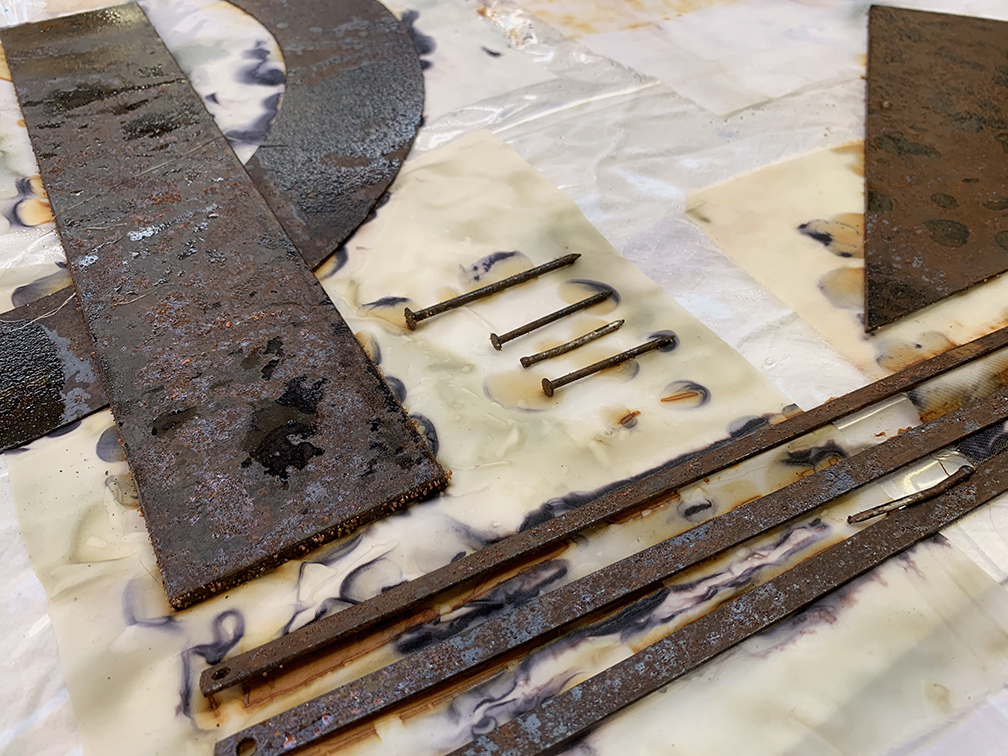
I have been enjoying experimenting with rust printing which is something I haven’t done before. It is essentially a way of transferring rust from an object to fabric.
Freshly rusted objects seem to work best. If they aren’t freshly rusted they need to be scrubbed with a wire brush or something similar to remove all the old loose rust. The fresh rust underneath is what we need to transfer.
The rusty objects need to be pressed on to the fabric. A kind of sandwich is made – blanket, plastic, damp fabric/paper, damp rusty objects, damp fabric/paper, plastic and the finally another blanket. The idea is to create a warm, humid environment around the rusty object to create more rust which will mark the fabric. The pressure and blanket encourages the fabric to mould around the objects to enable the rust to transfer to the fabric as much as possible. This all needs to be weighted down as evenly as possible so a big board and weights works well. This all needs to be left for 24-48 hours.
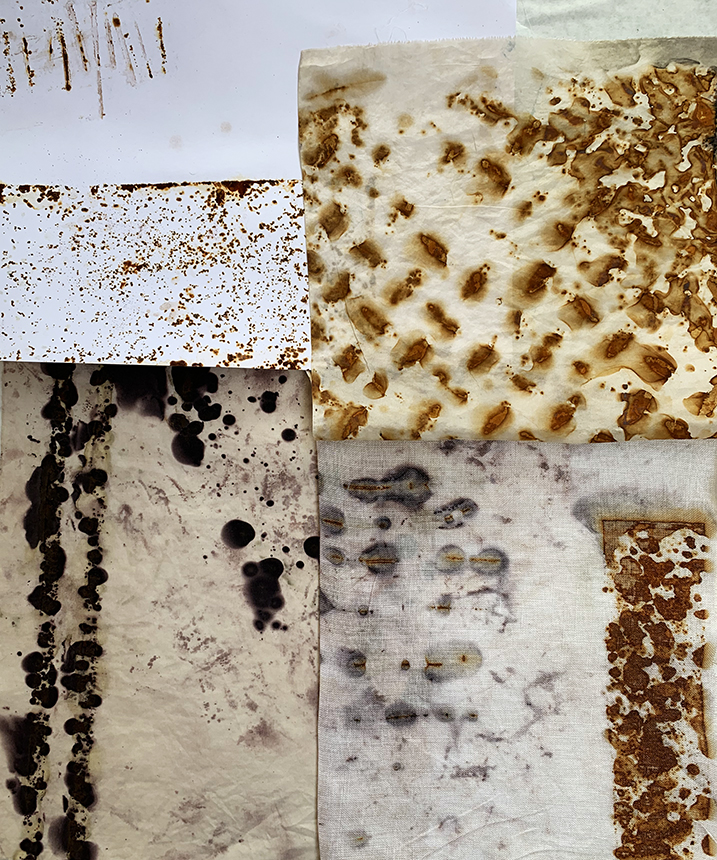
You’ll notice that some of the rust prints are black. For these samples the fabric has been soaked in a ferrous sulphate solution. The rust reacts with the ferrous sulphate and turns black.
I would love to experiment with this some more and test different fabrics/papers and objects, particularly on paper.
The things that effect how well it turns out are: getting the fabric/rusty objects the right dampness, how well rusted/scrubbed the objects are, how long it is left, which fabrics are used.
Some really interesting prints can be achieved with this method on a variety of fabrics. With some testing the prints can be made very detailed and clear.
I have recently been experimenting with indigo. It was a process I had been interested in for a while but didn’t know much about it. It’s been fun trying out different techniques and I have learnt a lot.
I started off with a very technical approach, asking questions such as what happens if I dip fabric once or ten times, does it make a difference if I use a full strength vat or half strength. I quickly realised that indigo’s unpredictable nature doesn’t lend itself to such a scientific approach.
Before I tell you about what I have learnt let’s talk about what indigo is…
Indigo is a natural dye which is used to dye fabric. Traditionally indigo was used to dye denim but a synthetic dye is now used. I use the word dye loosely when talking about indigo because what it actually does is stain the fabric. Unlike synthetic dyes it does not penetrate the fibres in the fabric but rather holds on to the surface of the fabric. If you dye something with indigo and then cut through it, the middle will still be the original colour. This also means that it is great for resist techniques.
The process for dyeing with indigo is to make up a vat containing various chemicals which create the optimal conditions for the indigo grains. The vat needs to be alkaline for the dye to work. It also needs to be reduced, meaning that the oxygen has to be removed. Salt is also used, as in a lot of dyeing recipes, to ensure the indigo adheres to the fabric. Indigo is not soluble in water meaning that the particles are suspended in the liquid. When the indigo is suspended in the alkaline, reduced solution it is yellowy green in colour until it comes in to contact with oxygen which turns it blue.
To dye fabric… Damp fabric is lowered slowly in to the indigo vat and kept under the surface for 1 – 3 minutes. It is then gently lifted up. It will look green but quickly turn blue as is oxygenates in the air. Once fully oxygenated it can then be dipped again. The number of dips needed depends on the required colour. It is important that as little air is introduced to the dye vat as possible otherwise the vat will become oxygenated and won’t work.
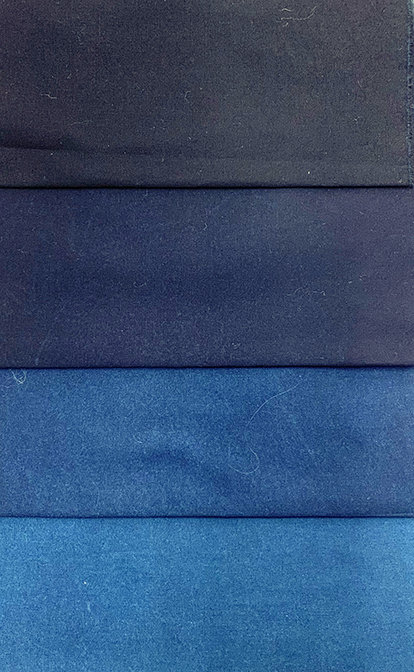
I found that dipping my fabric for about 1.5 minutes and leaving it to oxygenate for about 3 minutes worked well. Some people say that putting your fabric into a citric acid bath after the final oxygenation brightens the colour but I didn’t find it made much difference. This may be more important when using animal fibres as the alkalinity of the vat can damage the fibres, these prefer acidic conditions.
I started off with the idea that I can compare and investigate thoroughly if I start with a control set of samples – cotton poplin fabric dipped as above but with varying dips (1, 3, 5 ,10). Then I could carry on recreating these but varying certain aspects to see the effects e.g. different dip times, washing between dips, using citric acid. However, I quickly realised that indigo is unpredictable. The vat changes as it is used, the indigo concentration decreases with more dips, the vat becomes oxygenated. A 5 dip sample will not be comparable the next five dip sample. It is unpredictable. Which is part of it’s charm.
It was more difficult to get a beautiful even colour than I thought it would be. I found that when it was oxygenating any small inconsistency in the fabric would cause a ‘blemish’. Where water sits on the fabric, either at the bottom when hanging or in the slight creases of the fabric, it wouldn’t darken as much as the rest of it. Also, if a thread from the edge of the fabric sat over it, that part wouldn’t darken as much. This is because the oxygen couldn’t get to the indigo on the fabric as easily. I found that I got a more even colour if I washed the fabric in cold water immediately after each dip. Also the more dips the more even the colour.
I was hoping to be able to get a good light colour as well as the classic dark indigo blue but didn’t manage to. If I did fewer dips I got a light colour but it was uneven and a half strength vat didn’t produce a lighter colour with comparable dips.
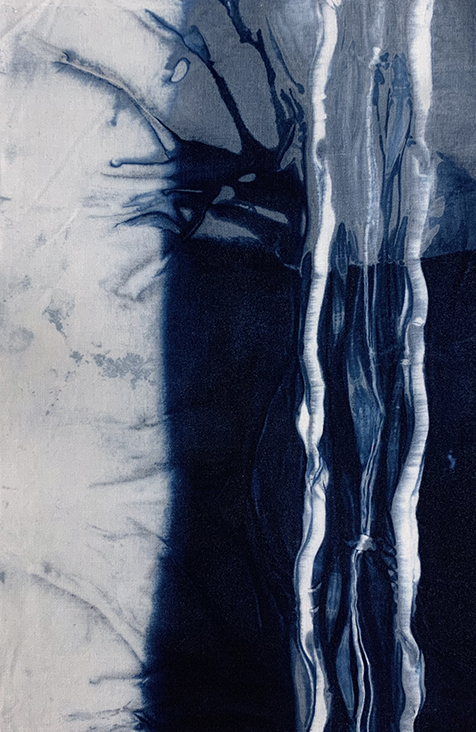
The first resist technique above was created by wrapping fabric around a plastic tube and securing it with elastic bands. I found it very difficult to keep the white bit clean and where the fabric was wrapped over itself I couldn’t get the colour as dark as I would have liked. This is due to the indigo not penetrating the fibres as mentioned above. The second resist was created by folding the fabric and securing with bulldog clips. I found that when using resist I needed to dip more times to darken the colour of the fabric wrapped in the middle. It also needed longer to oxygenate and while it was oxygenating it needed to be opened as much as possible without removing the resist to allow the fabric in the middle to oxygenate.
Overall I found the process really interesting and would love to incorporate it in to some of my woven work.
This is only a brief summary of my experiments in indigo but if you would like more information on my techniques or discuss the process please feel free to comment or email me.
After our real life adventure at the Victoria and Albert Museum I was approached by a children’s author, Lucia Wilson. She was inspired by seeing Cedric on tv and wanted to write a book based on our story.
In story one, Cedric is having an exciting time being the centre of attention in the V&A Museum. When a young man called Troy decides to bear-nap Cedric, things take an alarming turn. Freddie and Julie, two young children who witness this crime, decide to play detective.
In story two, Cedric meets the Button Bear, trapped in a dark, miserable basement living with the meanest tailor in London. Cedric gathers a team of chums from London Zoo, Polo the penguin and a cheeky gang of squirrel monkeys, and is determined to rescue the Button Bear and to help him find his way home.
In story three, Cedric sets off to Paris for a long-overdue reunion with his cousin, Velours, a blue velvet cat. Cedric was shocked to see that Velours was now disabled; one of her back legs has been replaced with a rubber wheel after a horrible accident. Cedric’s sadness quickly disappears when he realises that Velours hasn’t let her disability hold her back, in fact, he was thrilled to learn that she was about to run in Le Grand Dash, the biggest race in the Pet Paralympics – and she is the favourite to win!